

Sforza Castle Visitor Rules: Bags, Lockers & Photography
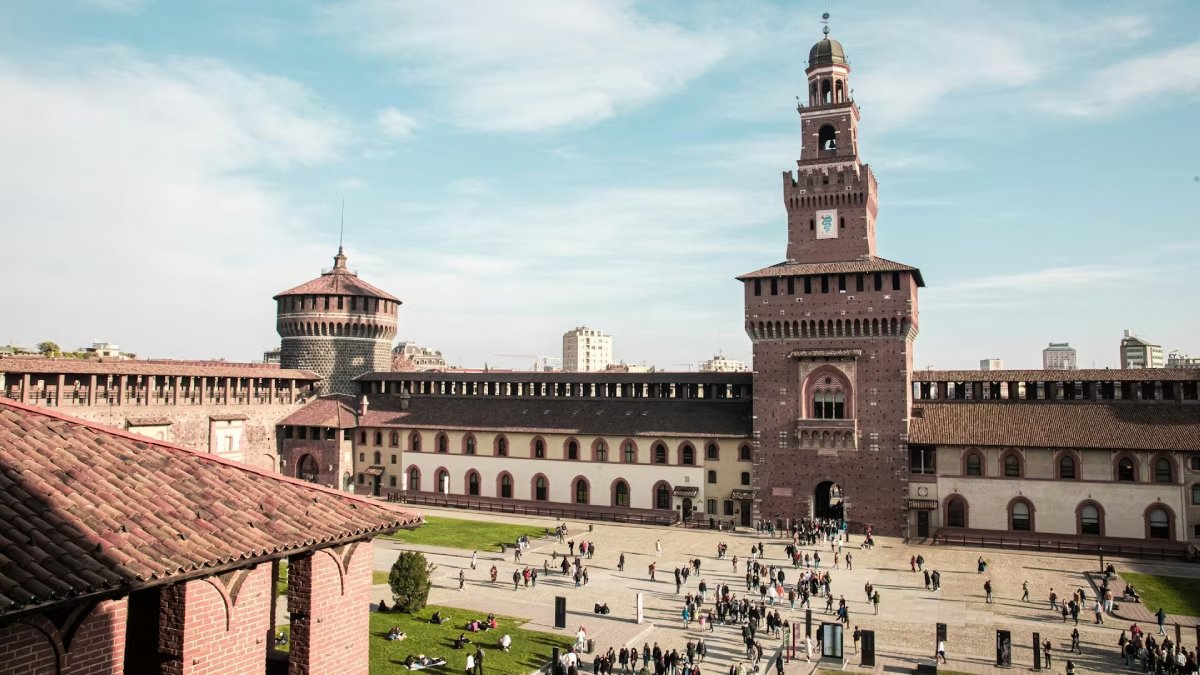
The free courtyards and grounds at Sforza Castle have no bag checks or dress code — you can walk in and out freely. Inside the ticketed museums, large backpacks and suitcases are not allowed and must be left at the free cloakroom, photography without flash or tripods is generally permitted, and food and drink are not allowed in the galleries. A brief security screening applies at the museum entrance, not at the courtyard gates.
Sforza Castle is really two spaces with two different sets of rules: the open courtyards, where you can wander freely with a backpack, a stroller, or a takeaway coffee, and the ticketed museums, where the usual Italian museum etiquette applies — smaller bags only, no flash, no food, and quiet conduct around the collections.
Most visitors never run into a problem, since the rules are standard for European museums and mainly concern what you’re carrying and how you photograph. This guide sets out exactly what’s allowed, what has to go in the cloakroom, and where the free-versus-ticketed distinction matters most.
Free Courtyards vs. Ticketed Museums: What’s Allowed Where
The Piazza d’Armi, Corte Ducale, Rocchetta courtyards, and the ramparts are free, unticketed public space with essentially no restrictions — you can bring any bag, a stroller, a picnic, or a dog on a lead. The rules below apply once you step into the ticketed museums (Museum of Ancient Art, Pinacoteca, Egyptian Museum, and the rest), which are staffed, monitored spaces housing fragile art and artifacts.
This distinction matters because most of what people picture when they imagine “the castle” — crossing under the Filarete Tower, standing in the Piazza d’Armi, walking the courtyards — is free and open, and none of the bag or conduct rules below apply there. It’s only once you buy a ticket and enter the museums — to see the Rondanini Pietà, the Pinacoteca, or Leonardo’s Sala delle Asse — that cloakroom, photography, and food rules come into force. If you’re only planning a courtyard visit, you can skip straight to the security screening section below; everything else here concerns the museum galleries.
Bag Size Limits & the Free Cloakroom
Small to medium bags — a daypack, handbag, or camera bag — are generally fine to carry through the museum galleries. Anything larger, along with any item staff consider a security risk or a threat to the artwork, needs to be checked at the cloakroom near the museum entrance before you go in. The cloakroom is free to use and simply exchanges your bag for a numbered ticket, so budget a few extra minutes at busy times.
Coats, umbrellas, and anything else bulky are also commonly asked to be left at the cloakroom rather than carried through the galleries. If you’re traveling light for the day, this is a non-issue; if you’ve come straight from the airport or a day of shopping, plan on checking your bag rather than trying to carry it through the Pinacoteca.
Large Backpacks, Luggage & Suitcases
Large backpacks, hiking-size rucksacks, and any kind of wheeled suitcase or luggage are not allowed inside the museum galleries. These have to be left at the cloakroom, and in the case of full-size suitcases, staff may ask you to leave them elsewhere entirely if there isn’t room to store them — the cloakroom is sized for day bags and coats, not check-in luggage.
If you’re visiting the castle on a travel day between hotel checkout and a train or flight, the practical answer is to store your luggage before you arrive, either at your hotel, a left-luggage service, or a locker near Milano Centrale, rather than risk being turned away or having to skip the museums.
Photography & Video Rules
Photography without flash and without a tripod is generally allowed throughout the museums, so you can photograph the Rondanini Pietà, the courtyards, and most of the permanent collections for personal use. Flash is restricted because it can damage pigments, textiles, and aged surfaces over repeated exposure, and tripods and monopods are restricted mainly because they slow down foot traffic in rooms that are often narrow and crowded.
Some temporary exhibitions bring in loaned works with their own, stricter photography rules set by the lending institution — occasionally no photography at all. Signage at the entrance to any temporary exhibit will say so; when in doubt, check with the room attendants before shooting. In the free courtyards, there are no photography restrictions of any kind, including tripods, which makes early morning or evening light there a better bet for serious photography than the galleries.
Food & Drink
Food and drink are not allowed inside the museum galleries, in keeping with standard practice for collections that include paintings, textiles, and ancient artifacts. Water is normally fine to carry, but eating or drinking near the exhibits is not. There’s no café inside the museums themselves, so plan your snack or coffee stop for before you go in or after you come out.
The free courtyards are a different story — a bottle of water, a coffee, or even a packed lunch on a bench in the Piazza d’Armi is entirely normal, and there’s nothing stopping you from picnicking in view of the Filarete Tower as long as you take your rubbish with you.
Conduct, Quiet & General Etiquette
Inside the museums, the expectation is the same as any major collection: keep voices low, don’t touch the artwork or display cases, stay behind any barriers or ropes, and follow directions from room attendants. Running, loud conversation, and phone calls are discouraged in the galleries, both out of respect for other visitors and because sound carries in the castle’s stone rooms.
The courtyards are far more relaxed — they’re genuinely public space, used by Milan residents for walking dogs, meeting friends, and cutting through toward Parco Sempione, so ordinary outdoor behavior is fine there.
Prams, Strollers & Wheelchairs
Prams and strollers are welcome throughout the free courtyards, and most of the ground-floor museum route is accessible with a stroller as well, though some interior thresholds and older flooring can make certain rooms trickier to navigate. Wheelchair users have step-free access to the main courtyards and to most ground-floor galleries; a few rooms with stairs or raised thresholds are harder to reach. Our Sforza Castle accessibility guide covers step-free routes, accessible toilets, and which museum sections are hardest to reach in detail, and our guide to visiting with kids has more on managing a stroller through the museum route.
Pets & Assistance Dogs
Dogs on a lead are a common sight in the free courtyards and grounds, since the castle sits in the middle of a public square that many Milan residents cross daily — ordinary pets are welcome there. Inside the ticketed museums, pets are generally not allowed, with the standard exception of certified assistance dogs, which are permitted throughout. If you’re traveling with a pet and want to see the museums, plan for someone to wait with the dog in the courtyard, since there’s no on-site pet-sitting service.
Smoking, Drones & Other Restrictions
Smoking is not allowed inside the museum buildings and is restricted in parts of the outdoor grounds as well, in line with general Italian rules on smoking near public buildings and monuments; look for posted signage if you’re unsure where it’s permitted. Drones are not allowed to be flown anywhere on the castle grounds or over the courtyards — this is both a security restriction and a rule that applies broadly across central Milan’s historic monuments, so leave the drone at the hotel.
Beyond these, expect the usual restrictions common to Italian state and municipal museums: no touching the exhibits, no climbing on walls or ramparts outside marked areas, and no commercial photography or filming without prior permission from the museum administration.
Security Screening
A security screening applies at the entrance to the ticketed museums, typically a bag check and sometimes a walk-through metal detector, similar to what you’d expect at any major Italian museum. This is where the cloakroom rule for large bags and luggage is enforced — staff will direct you to check anything oversized before you’re screened and let through.
The free courtyards and grounds have no security screening or bag check at all; you can walk in through the Filarete Tower gate at any time without being stopped, since it’s open public space rather than a controlled entrance. Screening only happens once you approach the specific museum ticket and entry point inside the complex.
Frequently Asked Questions
Can I bring a backpack into Sforza Castle’s museums?
A small to medium daypack is generally fine to carry through the galleries. Large backpacks, hiking rucksacks, and any kind of suitcase are not allowed inside and need to be left at the free cloakroom near the museum entrance.
Is there a cloakroom or locker at Sforza Castle?
Yes, there’s a free cloakroom near the museum entrance where you can check bags, coats, and other bulky items that aren’t allowed in the galleries. It’s not designed for full-size luggage, so travel-day suitcases are better left at your hotel or a left-luggage service beforehand.
Can I take photos inside Sforza Castle’s museums?
Photography without flash and without a tripod is generally allowed throughout the permanent collections, including the Rondanini Pietà. Some temporary exhibitions with loaned works may restrict or ban photography entirely, so check the signage at the entrance to any special exhibit.
Is flash photography allowed?
No, flash photography is not allowed inside the museums, since repeated flash exposure can damage pigments and aged surfaces over time. Photography without flash is fine for personal use in almost every gallery.
Can I eat or drink inside the castle?
Food and drink are not allowed inside the museum galleries, though water is normally fine to carry. The free courtyards are much more relaxed, and a coffee or picnic on a bench in the Piazza d’Armi is entirely normal.
Are dogs allowed at Sforza Castle?
Dogs on a lead are welcome throughout the free courtyards and grounds, which function as public space in central Milan. Pets are generally not allowed inside the ticketed museums, with the exception of certified assistance dogs.
Are strollers and wheelchairs allowed inside the museums?
Yes, most of the ground-floor museum route is accessible with a stroller or wheelchair, though a few rooms with steps or raised thresholds are harder to reach. Our accessibility guide covers step-free routes and accessible toilets in more detail.
Is there a security check to enter Sforza Castle?
There’s no security check to enter the free courtyards through the Filarete Tower gate — it’s open public space. A brief bag check and sometimes a metal detector apply only at the entrance to the ticketed museums.
Can I fly a drone at Sforza Castle?
No, drones are not permitted anywhere on the castle grounds or over the courtyards, in line with restrictions that apply across central Milan’s historic monuments.
Do the free courtyards have any rules at all?
The courtyards have essentially none of the museum restrictions — no bag limits, no photography rules, and no food ban — since they’re ordinary public space. General good conduct still applies: no drones, no smoking in restricted areas, and no climbing on walls or ramparts outside marked areas.
