

Sforza Castle Map & Orientation Guide: Layout Explained
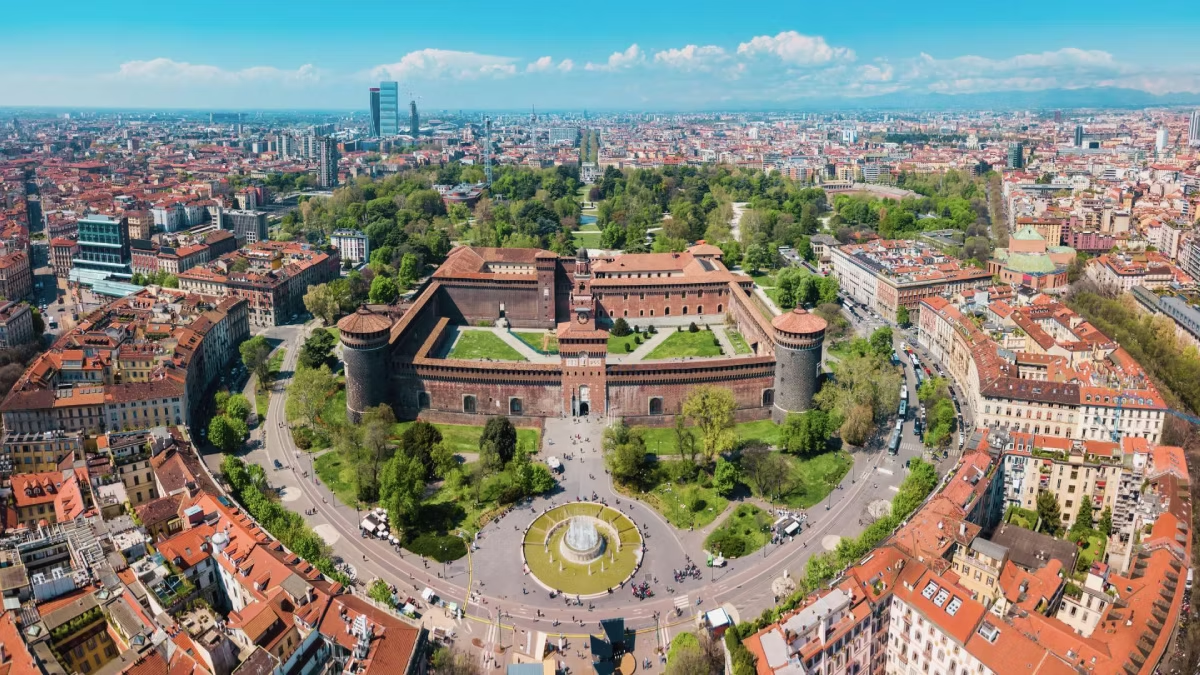
You enter Sforza Castle through the central Filarete Tower into the Piazza d’Armi, the huge open parade court. The Corte Ducale, home to most of the museums, sits on one side; the Rocchetta, the fortress-within-a-fortress, sits on the other. From the far end of Piazza d’Armi you can continue straight through into Parco Sempione, or loop back to explore the ramparts and towers. The layout is simple once you know the three courtyards — most visitors get lost only because they expect a single building rather than a walled complex of open squares.
Sforza Castle can look confusing from the outside — a huge brick quadrilateral with towers at every corner — but the internal layout is more straightforward than it appears. There are really only three connected open spaces to keep in mind, plus a ring of ramparts around the outside and a park beyond. This guide walks through the layout in words, courtyard by courtyard, and suggests a logical route so you don’t backtrack across the same ground twice.
Remember the basic rule of the castle: the courtyards and grounds are free and open to everyone, while the museums arranged around the Corte Ducale and Rocchetta need the combined ticket. You can get a real sense of the place without paying a cent, but the ticketed rooms are where the best art lives.
Entering Through the Filarete Tower
The main entrance is the tall, central Filarete Tower on the Piazza Castello side, facing the Duomo. Walking through it takes you straight into the Piazza d’Armi, the castle’s largest courtyard, with no ticket needed for this part of the visit.
Almost every visitor arrives from the city center side, crossing Piazza Castello toward the unmistakable Filarete Tower — the tall, square tower with a clock face that anchors the middle of the castle’s front wall. It’s a 1905 reconstruction by Luca Beltrami of the original 15th-century gate tower, and passing beneath its archway is the classic first step of any visit. There are smaller side entrances too, including one nearer Via Beltrami and openings on the park side, but the Filarete Tower is the natural, most orienting way in.
Once through the tower, you’re in the Piazza d’Armi, and the whole shape of the castle starts to make sense.
Piazza d’Armi: The Great Court
The Piazza d’Armi is the huge open court just inside the main entrance — a wide, mostly grassy parade ground that was historically used for troops and ceremonies. It’s the biggest single space in the complex, and it’s where most people pause to get their bearings. Facing away from the Filarete Tower, toward Parco Sempione, the Corte Ducale and Rocchetta buildings sit to your sides rather than in front of you, forming an inner cluster of courtyards roughly in the center-left of the overall complex as you walk through.
Because it’s open, free, and shaded in places by trees, the Piazza d’Armi works well as a meeting point, a rest stop, or simply the place to plan the rest of the visit before deciding whether to buy museum tickets.
Corte Ducale: The Ducal Court and Most of the Museums
The Corte Ducale is the elegant inner courtyard that once housed the Sforza family’s residence, and it’s where most of the museum entrances and the ticket office are located. This is the side to head for if your priority is the museums.
Tucked beside the Piazza d’Armi is the Corte Ducale, a smaller, more refined courtyard lined with porticoes — this was the actual residential and ceremonial heart of the Sforza court, and it feels noticeably more decorated than the plain expanse of the Piazza d’Armi. The museum ticket office and the entrances to most of the Musei del Castello Sforzesco open off this courtyard, including the Museum of Ancient Art, the Pinacoteca (picture gallery), the Museum of Decorative Arts, and the Museum of Musical Instruments. Leonardo da Vinci’s Sala delle Asse, the frescoed room with its painted canopy of interwoven mulberry branches, is also reached from this side of the complex, in the Ducal apartments — though it’s frequently closed for restoration, so confirm access before you count on seeing it.
The Rondanini Pietà, Michelangelo’s last and unfinished sculpture, is displayed separately in the former Spanish Hospital building, which sits at the edge of the Corte Ducale area rather than deep inside it — it has its own dedicated room and is usually one of the first or last stops depending on which direction you walk the museum route.
The Rocchetta: The Inner Keep
Across from the Corte Ducale is the Rocchetta, the most heavily fortified inner section of the castle — a small, self-contained fortress designed as a last line of defense, with its own moat (now dry) and drawbridge. It’s more compact and closed-in than the Corte Ducale, with a plainer courtyard, and it holds the remaining museum collections, including the Egyptian Museum and the prehistoric collections. Because it sits slightly apart from the main visitor flow, it tends to be quieter, and it’s easy to miss if you don’t specifically look for the passage connecting it to the rest of the museum route.
Ramparts and the Ghirlanda
Running around the outside of the castle, between the outer walls and the moat, is the Ghirlanda — the low fortified rampart added for artillery defense. Sections of the ramparts and corner bastions are open to walk along, giving a different, more elevated perspective on the castle than the courtyards below, along with views over the moat and surrounding gardens. This walk is part of the free grounds, not the ticketed museums, and it’s an easy add-on if you enter or exit on that side of the complex. Access points to the ramparts aren’t always obvious from the main courtyards, so watch for signed openings near the bastions rather than expecting a continuous marked path.
Exits Toward Parco Sempione
Walk straight through the Piazza d’Armi, away from the Filarete Tower, and you reach the castle’s rear side, which opens directly onto Parco Sempione, Milan’s large central park. This exit (or entrance, if you’re arriving from the park) is unticketed and unstaffed in the way the Filarete Tower side is — it’s simply a continuation of the free grounds into green space. It’s a good route if you’re combining the castle with a walk to the Arco della Pace at the far end of the park, or if you’re approaching from the Cadorna area rather than the Duomo side.
Toilets, Ticket Office, Café and Cloakroom
Practical facilities are clustered around the courtyards rather than scattered across the grounds, though exact locations can shift slightly as the castle carries out ongoing restoration work, so treat this as a general guide and follow the on-site signage:
- Ticket office: for the combined museums ticket, located off the Corte Ducale, near the main museum entrances. If you already have a reserved ticket booked online, you can generally bypass the ticket office line entirely.
- Toilets: available near the courtyards close to the museum entrances; there are no facilities inside the ticketed galleries themselves, so use them before you start the museum route.
- Cloakroom: a bag and coat check is provided near the museum entrance area — useful given that large bags often aren’t allowed inside the galleries.
- Café: there’s no full restaurant inside the walls, but a well-known kiosk café sits just behind the castle at the edge of Parco Sempione, a short walk from the rear exit — a good stop before or after a visit.
A Suggested Route Through the Castle
For a first visit, a simple loop works well and avoids doubling back:
- Enter through the Filarete Tower into the Piazza d’Armi and get your bearings.
- Head into the Corte Ducale to buy tickets (or show a reserved one) and begin the museum route, taking in the Rondanini Pietà, the Sala delle Asse if open, and the Pinacoteca.
- Continue through to the Rocchetta for the Egyptian and prehistoric collections.
- Step back outside and walk a section of the ramparts for a different view of the walls and moat.
- Cross back through the Piazza d’Armi and exit toward Parco Sempione, stopping at the kiosk café if you’d like a break.
This order keeps the museum visit together in one block, saves the free outdoor sections for either end of the trip, and finishes with the park rather than doubling back to the Duomo side — though it works just as well in reverse if you’re approaching from Cadorna or Lanza.
Where to Find the Official Map
For a printed or digital floor plan with current room-by-room detail, the castle’s official website publishes a map of the courtyards and museum galleries, and a physical map is normally available at the ticket office and information points near the Corte Ducale. Because gallery layouts and restoration closures change, the official map is the most reliable source for exact current routes inside the museums — this guide is best used to understand the overall shape of the castle before you arrive.
Frequently Asked Questions
Where is the main entrance to Sforza Castle?
The main entrance is through the Filarete Tower, the tall central tower facing Piazza Castello and the Duomo side of the city. Walking through it leads directly into the Piazza d’Armi, the castle’s largest courtyard. Smaller entrances also exist on other sides, including toward Parco Sempione.
What is the Piazza d’Armi?
The Piazza d’Armi is the large open parade court just inside the main entrance, historically used for troops and ceremonies. It’s free to enter and forms the central space you cross to reach the Corte Ducale, the Rocchetta, or the exit toward Parco Sempione. Most visitors pass through it first.
Where are the museums inside Sforza Castle?
Most of the museums, including the Pinacoteca and the Rondanini Pietà, are reached from the Corte Ducale, the more decorated inner courtyard beside the Piazza d’Armi. The Egyptian Museum and prehistoric collections are in the Rocchetta, the fortified keep on the other side. All are covered by one combined ticket.
Where is the Sala delle Asse?
Leonardo da Vinci’s Sala delle Asse is in the Ducal apartments reached from the Corte Ducale. It’s frequently closed for restoration, so check its status before your visit rather than assuming access.
Where is the Rondanini Pietà displayed?
Michelangelo’s unfinished Rondanini Pietà is shown in the former Spanish Hospital building, at the edge of the Corte Ducale area, in its own dedicated room. It’s included in the combined museums ticket, not a separate charge.
Can I walk the castle for free?
Yes. The courtyards, including the Piazza d’Armi, and the outer ramparts are free and open daily. Only the museum rooms inside the Corte Ducale and Rocchetta require the combined ticket.
Where is the ticket office?
The ticket office for the museums is located off the Corte Ducale, near the main gallery entrances. Visitors with a reserved ticket booked in advance can typically go straight to the entry point instead of queuing there.
Are there toilets and a café inside the castle?
Toilets are available near the courtyards close to the museum entrances, though not inside the galleries themselves. There’s no sit-down restaurant within the walls, but a popular kiosk café sits just behind the castle at the edge of Parco Sempione.
How do I get from the castle into Parco Sempione?
Walk straight through the Piazza d’Armi, away from the Filarete Tower, and the far side opens directly onto Parco Sempione. This route is free and unstaffed, and it also works in reverse if you’re entering from the park side.
Is there an official map of the castle?
Yes. The castle’s official website publishes a current map of the courtyards and museum galleries, and printed copies are usually available at the ticket office near the Corte Ducale. It’s the best source for exact gallery layouts, since these can change with restoration work.
