

Parking at Sforza Castle & Milan’s Area C Congestion Zone
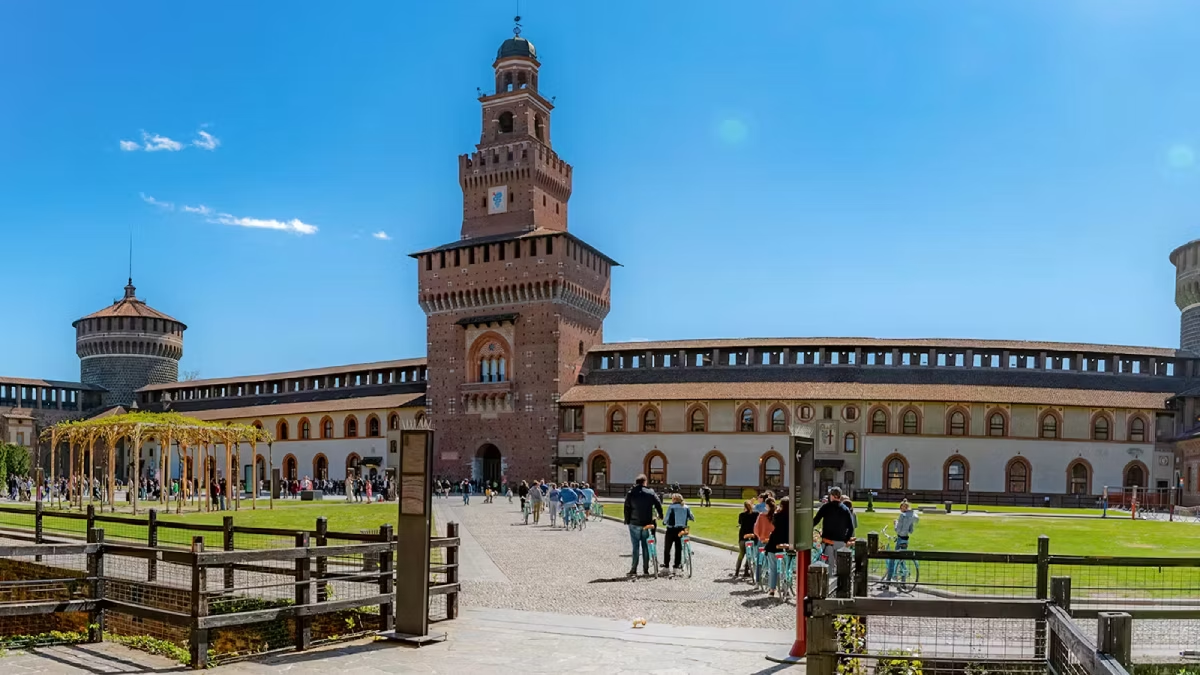
Sforza Castle sits inside Milan’s Area C congestion charge zone, so driving in on a weekday requires paying the daily fee before you enter. The most practical options are the paid garages around Cairoli, Cadorna, and Garibaldi, or on-street blue-line spaces if you can find one. Honestly, the smartest move is to park at a metro terminus outside Area C and ride in — it’s cheaper, faster, and avoids the charge entirely.
Sforza Castle is about as central as it gets in Milan, and that’s exactly why driving there is more hassle than it’s worth for most visitors. The castle sits inside — or right on the edge of — Area C, Milan’s paid congestion zone, and central Milan’s paid parking is limited, often full, and not cheap. This guide explains how Area C works, where to park nearby if you must drive, and why public transport is the honest recommendation for almost everyone.
Is Sforza Castle Inside Area C?
Yes, effectively. Sforza Castle stands right at the edge of Milan’s Cerchia dei Bastioni, the historic ring that defines Area C, and Piazza Castello is inside or immediately adjacent to the charging zone depending on the exact gate you use. Assume you’ll need to pay the Area C fee if you drive in during charging hours.
Area C is Milan’s traffic-limitation and congestion charge zone, covering the historic city center roughly bounded by the old bastions — the same ring that includes the Duomo, Brera, and Sforza Castle itself. If you’re driving from outside the center, you will cross into Area C to reach the castle, and the camera system at the gates will record your plate whether or not you’ve paid. There’s no way to reach the immediate area around Piazza Castello by car without either passing through an Area C gate or approaching from a boundary road, so plan on the charge applying.
How Area C Works
Area C charges most vehicles a daily fee to enter the zone on weekdays between roughly 7:30 AM and 7:30 PM (with a later end on Thursdays), Monday to Friday, excluding August and holidays. You pay before or on the day of entry — by app, website, SMS, tobacconist, or ATM — and cameras at the gates automatically read your plate.
The zone. Area C covers Milan’s historic center inside the Cerchia dei Bastioni, entered through around 40 electronic gates. Each gate has an automatic number-plate-recognition camera that logs every vehicle crossing in.
The hours. Charging normally runs Monday to Friday, from about 7:30 AM to 7:30 PM (extended to around 6:30 PM on Thursdays for shopping evenings — check current times, as these have shifted before). Outside charging hours, and on Saturdays, Sundays, and public holidays, you can generally enter free, though it’s worth confirming on the day since Milan occasionally runs special restrictions around events.
The fee. The standard daily charge is a flat fee (around €5 in recent years) that covers unlimited entries and exits for that single day. Residents of Area C, electric vehicles, and some other categories get exemptions or discounts — check your vehicle’s eligibility before you go.
How to pay. You can pay via the official Area C app or website, by SMS, at tobacconists (tabaccherie) displaying the Area C logo, or at ATMs/parking meters around the city. Payment can usually be made on the day of entry or the day after, but don’t rely on that grace period — pay before you drive in if you can, since the fine for an unpaid entry is far higher than the fee itself.
The cameras. The gate cameras photograph your plate automatically; there’s no toll booth to stop at. If you enter without paying and without an exemption, a violation notice with a fine will follow to the vehicle’s registered address (or the rental company, which will then bill you plus an admin fee), so don’t assume an unmanned gate means it’s free.
Parking Garages Near the Castle
If you do drive in, several staffed and automated garages sit within a short walk of Sforza Castle:
- Cairoli area — a handful of paid garages cluster around Largo Cairoli and Foro Buonaparte, a few minutes’ walk from the Filarete Tower. Convenient but among the pricier options given the location.
- Cadorna — parking around the Cadorna train and metro station, including multi-story options, is a common choice since it’s a short walk (about 10–15 minutes) to the castle and well connected by metro if you’d rather not walk.
- Garibaldi — the Porta Garibaldi area, a bit farther out, tends to have more availability and sometimes better rates, with a metro or tram ride to bridge the remaining distance to the castle.
Rates in central Milan garages typically run several euros per hour, with daily caps that can still add up to a significant sum for a full day. Availability tightens around weekends, holidays, and major events, so if you’re set on a specific garage, check whether it takes reservations or has a live availability app.
On-Street Parking: Blue and Yellow Lines
Milan marks legal on-street parking with painted lines, and it pays to know the difference before you leave your car:
- Blue lines (strisce blu) mark paid parking. Pay at the nearby meter or via a parking app, and display or register your ticket as required. Time limits and free hours (often middays or overnight, depending on the street) vary block by block, so read the posted sign carefully.
- Yellow lines (strisce gialle) are reserved — for residents with permits, loading, disabled parking, or other restricted uses. These are not for general public parking, and cars parked illegally on yellow lines are towed.
- White lines mark free unrestricted parking, though genuinely free on-street spots are rare in the center and usually far from the castle.
Around Piazza Castello and Parco Sempione itself, on-street spaces are scarce and heavily used, so don’t count on finding a spot right outside — treat street parking as a backup, not a plan.
The Smart Alternative: Park-and-Ride at Metro Termini
The honest recommendation is to skip driving into the center entirely. Milan’s metro lines have park-and-ride (parcheggi di interscambio) facilities at outer stations, often at a fraction of the cost of a center-city garage, with the metro ride into Cairoli Castello or Cadorna taking 15–25 minutes.
If you’re arriving by car from outside Milan, look for a park-and-ride at an outer metro station on M1 or M2 — stations like Famagosta, San Donato, Sesto Marelli, or Cascina Gobba, among others, have large surface or multi-story car parks designed for exactly this. You park outside Area C (avoiding the congestion charge entirely), pay a modest daily parking rate, and take the metro straight into Cairoli Castello, Cadorna, or Lanza — all within a short walk of Sforza Castle. It’s typically cheaper than a center garage, sidesteps the Area C fee and camera risk altogether, and gets you closer to the castle door than most parking options would. For the full range of transport options into the castle, see our guide on how to get to Sforza Castle.
EV and Disabled Parking
Electric vehicles. Fully electric cars are generally exempt from the Area C charge, though you may still need to register the vehicle with the Area C system to have the exemption recognized automatically at the gate cameras. Charging points exist at some central garages and around the city, but availability isn’t guaranteed, so don’t count on finding a free charger near the castle without checking ahead.
Disabled parking. Vehicles displaying a valid disabled parking permit (contrassegno) are typically exempt from the Area C charge and can use designated disabled spaces, which are marked with yellow lines and a wheelchair symbol. Dedicated disabled parking near Piazza Castello is limited, so if accessible parking is essential, it’s worth calling ahead or checking the Area C and Milan municipal sites for current rules and the nearest confirmed spaces. Our accessibility guide covers getting around the castle itself once you’ve arrived.
Our Honest Recommendation
We won’t pretend driving to Sforza Castle is a good idea for most visitors. Between the Area C charge, scarce and pricey center-city parking, one-way streets, and limited traffic zones (ZTL) beyond Area C itself, driving into central Milan adds cost, stress, and time compared to the alternatives. Milan’s public transport is genuinely good: the M1 metro drops you at Cairoli Castello, practically at the castle gate, and trams and buses reach it from most directions. If you’re staying in Milan, leave the car at the hotel or a park-and-ride and take the metro. If you’re arriving from outside the city, park-and-ride at an outer metro station, or simply return a rental car at the airport or edge of town before heading into the center. It’s the cheaper, calmer, and more reliable way to arrive.
Frequently Asked Questions
Is Sforza Castle inside Milan’s Area C zone?
It sits right on the edge of the Cerchia dei Bastioni, the ring that defines Area C, and Piazza Castello is inside or immediately adjacent to the charging zone. Assume the Area C fee applies if you’re driving in on a weekday. Confirm the exact boundary on the Area C map before you plan a route.
How much does Area C cost per day?
The standard daily fee is a flat charge, typically around €5, covering unlimited entries and exits for that calendar day. Residents, electric vehicles, and some other categories may be exempt or discounted. Check current pricing on the official Area C site since fees can change.
What are Area C’s operating hours?
Charging generally runs Monday to Friday, roughly 7:30 AM to 7:30 PM, with a later end on Thursdays. It’s typically free to enter on weekends, public holidays, and in August. Always verify current hours before you drive, as schedules can shift for holidays or events.
How do I pay the Area C charge?
You can pay through the official Area C app or website, by SMS, at tobacconists displaying the Area C logo, or at city parking meters and ATMs. Payment can usually be made on the day of entry or the following day. Paying in advance is the safest way to avoid a fine for a missed deadline.
What happens if I don’t pay Area C?
Cameras at the gates automatically photograph every plate that enters, whether or not it’s paid. If you drive through without paying and without an exemption, a fine will be issued to the vehicle’s registered owner or rental company, and it will cost considerably more than the daily charge itself.
Where’s the closest parking garage to Sforza Castle?
The nearest paid garages cluster around Cairoli and Foro Buonaparte, just a few minutes’ walk from the Filarete Tower. Cadorna, a short walk or one metro stop away, is another common option with more capacity. Expect central rates and limited spaces, especially on weekends.
Is there free parking near the castle?
Genuinely free on-street parking near Piazza Castello is rare; most legal spaces are paid blue-line spots, and yellow lines are reserved for residents, loading, or disabled permit holders. Park-and-ride at an outer metro station is usually the closest thing to a low-cost option. Don’t expect to find free street parking right by the castle.
Are electric vehicles exempt from Area C?
Fully electric vehicles are generally exempt from the daily Area C charge, though you may need to register the vehicle so the gate cameras recognize the exemption. Charging infrastructure near the castle is limited, so check availability if you’ll need to charge during your visit.
Is it better to drive or take public transport to Sforza Castle?
Public transport is the honest recommendation for nearly everyone. The M1 metro’s Cairoli Castello stop is a short walk from the castle, avoiding the Area C charge, parking costs, and central Milan traffic altogether. Driving only makes sense if you’re combining the visit with other errands that require a car.
Can I park at a metro station outside Area C and ride in?
Yes — Milan’s outer metro stations on M1 and M2 have park-and-ride facilities where you can leave your car outside the charging zone and take the metro into Cairoli Castello or Cadorna in 15–25 minutes. This avoids the Area C fee entirely and is typically cheaper than parking in the center.
