

Sforza Castle Ramparts Walk & the Ghirlanda: What to Know
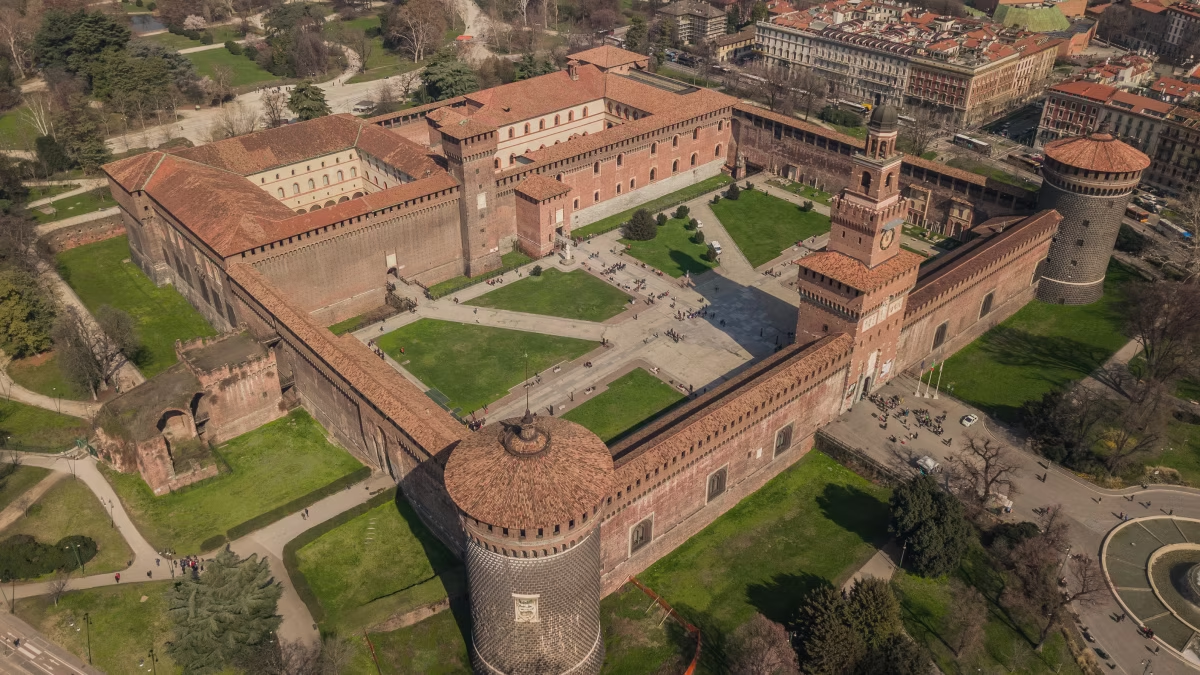
The camminamento di ronda — the walkway atop Sforza Castle’s walls — is not a standing part of the free daily visit; it opens only occasionally, for temporary exhibitions or scheduled guided tours, and is not included with the combined museum ticket. The Ghirlanda, the castle’s former outer ring of walls and moat, survives mainly as earthworks and contours around the perimeter rather than as a walkable structure. Expect to admire the ramparts, merlons, and moat from ground level on most visits, with rampart access as a bonus if your dates line up with a special opening.
Sforza Castle’s walls look made for walking — a continuous stone ring punctuated by squared Ghibelline merlons, corner bastions, and the Filarete Tower rising at the center. Many visitors assume that walkway along the top, the camminamento di ronda, is simply part of wandering the free grounds. It usually isn’t.
This guide explains what the ramparts actually are, when (and whether) you can walk them, what remains of the Ghirlanda and the old moat, and how the merlons and any “secret passages” tours fit into a realistic visit.
What Is the Camminamento di Ronda?
The camminamento di ronda is the sentry walk that runs along the top of Sforza Castle’s curtain walls, linking the corner bastions and passing behind the battlements that crown the fortress. It was built for exactly the purpose it sounds like: soldiers patrolling the perimeter, watching the approaches, and moving defenders quickly between towers without descending into the courtyards. Structurally, it’s the same idea you’d find on city walls elsewhere in Italy — a raised, narrow walkway set behind a parapet of merlons, high enough to see over, low enough to duck behind.
Today the walkway survives largely intact in places, but it is not treated as an everyday visitor route the way the Piazza d’Armi or Corte Ducale are. It sits above the areas covered by the standard visit, and for structural, security, and conservation reasons the castle doesn’t leave it open for casual daily access.
Views From the Ramparts
When the ramparts are open — during a temporary exhibition staged along the walls, or on a scheduled guided walk — the views are the main reward. From above, you look straight down into the courtyards you’d otherwise only see from ground level: the broad expanse of the Piazza d’Armi, the more intimate Corte Ducale, and the fortified compactness of the Rocchetta. Looking outward, the walls give a clear line toward Parco Sempione and, on a clear day, the Arco della Pace framed at the far end of the park’s central avenue. Close up, you get a soldier’s-eye view of the Filarete Tower and the corner towers that most visitors only ever see from below.
It’s a genuinely different way to read the castle — as a working fortress rather than a museum campus — which is part of why access is worth checking for even though it can’t be counted on.
Is Rampart Access Free, Limited, or Ticketed?
Rampart access is not part of the free grounds and not covered by the €5 combined museum ticket. When the walkway is open, it’s typically tied to a specific temporary exhibition, cultural event, or a separately bookable guided tour with its own schedule and, often, its own fee or reservation requirement.
This is the point worth being honest about: the courtyards, the Piazza d’Armi, and the walk toward Parco Sempione are free and open daily, but the elevated rampart walkway is a separate, more restricted feature. It is not a fixed daily attraction with its own opening hours the way the courtyards or museums are. Whether you can walk it on any given day depends on what’s programmed at the castle that season — sometimes nothing, sometimes an art installation or exhibition that uses the walls, occasionally a guided access route. Don’t plan a trip around walking the ramparts without confirming current access on the official Castello Sforzesco site or with the operator of a specific tour first; treat it as a possible bonus rather than a guaranteed part of the visit.
The Ghirlanda: The Castle’s Outer Ring
The Ghirlanda — literally “garland” — was the outer ring of defensive walls the Sforza dukes added beyond the main citadel walls, separated from them by a moat, as an extra layer of protection with its own lower parapet and passage. It was a serious piece of Renaissance military engineering in its day, wrapping around the castle’s exposed sides.
Most of the Ghirlanda was dismantled long ago as Milan grew and the castle’s military role faded, and it does not survive today as a walkable structure the way the main walls do. What remains is mostly legible in the shape of the ground: contours, sunken areas, and the broader footprint of the old fortifications around the perimeter, particularly on the side facing Parco Sempione, where the park’s landscaping still traces something of the earlier defensive layout. If you’re picturing an intact second wall you can walk along, temper that expectation — the Ghirlanda today is more a matter of history and topography than a discrete sight you visit.
Underground Passages and Moat Remnants
Sforza Castle’s dry moat once ringed the entire fortress, a substantial ditch that added another obstacle beyond the walls and the Ghirlanda. It was drained long ago, and today its former line is mostly visible as sunken lawns and gentle depressions around parts of the perimeter rather than as standing water — most noticeably in the approach areas near the Filarete Tower.
The castle also has a history of underground passages, cellars, and connecting tunnels from its centuries as a fortress and later a barracks, including passages said to have once linked it toward other points in the city. Some of these spaces are opened to the public only occasionally, through scheduled guided tours or special cultural openings organized by the city or castle staff — they are not a standing daily attraction, and details of what’s accessible change from year to year. If underground passages are part of what draws you to the castle, check the official site or search current guided-tour listings before your trip rather than assuming access on arrival.
Merlons and Ghibelline Battlements
Look up at the walls from any of the courtyards and you’ll see the castle’s battlements clearly: square merlons with a distinctive swallowtail notch cut into the top, known as Ghibelline merlons. This forked shape was common across medieval and Renaissance Lombardy and is one of the castle’s most recognizable architectural details, visible along the main curtain walls, the corner bastions, and the Filarete Tower itself. You don’t need rampart access to appreciate them — they’re clearly visible from the Piazza d’Armi and from outside the castle along Piazza Castello, and they photograph especially well in the late-afternoon light.
Guided “Secret Passages” Tours
From time to time, guided tours built around the castle’s less conventional corners — underground spaces, restricted areas, or sections of the walls — are offered either by the castle itself or by outside operators. These “secret passages” style experiences, when available, are the most reliable way to see parts of the fortress that aren’t part of the standard free-grounds-plus-museums visit, but they run on their own limited schedule, often in Italian or with small group sizes, and aren’t always bookable year-round. Our guide to guided tours covers the current options for going beyond the standard visit; check there or on the official site for whether a passages-focused tour is running before you build a visit around it.
Realistic Expectations for Your Visit
The honest summary: plan your visit around the free courtyards, the Filarete Tower, and the museums, all of which are reliably open on their published hours. Treat rampart access, a Ghirlanda walk, or an underground passages tour as something to check for and welcome if it’s available on your dates, not something to count on. If seeing the walls from above matters to you specifically, search for current temporary exhibitions or guided-tour listings shortly before your trip rather than relying on older information, since programming along the ramparts changes with little advance notice.
Frequently Asked Questions
Can visitors walk the ramparts at Sforza Castle?
Not as a standing part of the regular visit. The camminamento di ronda opens only occasionally, tied to temporary exhibitions or scheduled guided tours, so access depends on what’s programmed when you visit rather than being available every day.
Is walking the ramparts included with the museum ticket?
No. The combined museum ticket covers the Museum of Ancient Art, the Pinacoteca, and the other collections, but it does not include rampart access. When the walls are open to visitors, it’s usually through a separate exhibition or a distinct guided tour.
What is the Ghirlanda at Sforza Castle?
The Ghirlanda was the outer ring of defensive walls the Sforza dukes added beyond the main castle walls, separated by a moat, as extra fortification. Most of it was dismantled as Milan expanded, and today it survives mainly as ground contours and earthworks rather than as an intact structure you can walk.
Is there still a moat around Sforza Castle?
The moat is dry and no longer holds water, but its former line is still visible in places as sunken lawns and shallow depressions around parts of the perimeter, especially near the approach to the Filarete Tower. It isn’t a distinct paid sight — you’ll notice it in passing as you walk the grounds.
Can I visit underground passages at Sforza Castle?
Occasionally. The castle has a history of cellars and connecting tunnels, and some are opened to the public through scheduled guided tours or special openings, but this isn’t a standing daily attraction. Check current tour listings or the official site before planning a visit around it.
What are the pointed battlements on the castle walls called?
They’re Ghibelline merlons — square battlements with a swallowtail notch cut into the top, common across medieval Lombardy. They run along the curtain walls, bastions, and the Filarete Tower, and are easy to see from the free courtyards without needing rampart access.
Are there guided tours of the ramparts or secret passages?
Sometimes. Tours built around the castle’s underground spaces or restricted sections run periodically, either through the castle or outside operators, but they aren’t available year-round and schedules vary. Our guide to guided tours lists current options.
Do the ramparts offer views over Parco Sempione?
Yes, when they’re open. From the walkway you can look out toward Parco Sempione and, on a clear day, the Arco della Pace at the far end of the park’s central avenue, along with a rare overhead view into the castle’s own courtyards.
Why isn’t the rampart walk open every day?
Structural conservation, security, and the fact that the walkway isn’t set up as a standard visitor route all play a part. The castle prioritizes keeping the courtyards and museums reliably open, and treats the ramparts as an occasional, programmed feature rather than a fixed daily attraction.
Should I plan my visit around seeing the ramparts?
It’s safer not to. Build your visit around the free courtyards, Filarete Tower, and museums, which keep dependable hours, and treat any rampart, Ghirlanda, or underground-passage access as a welcome extra if the timing works out rather than the centerpiece of your plan.
