

Sforza Castle Museums Explained: The Full Collection Guide
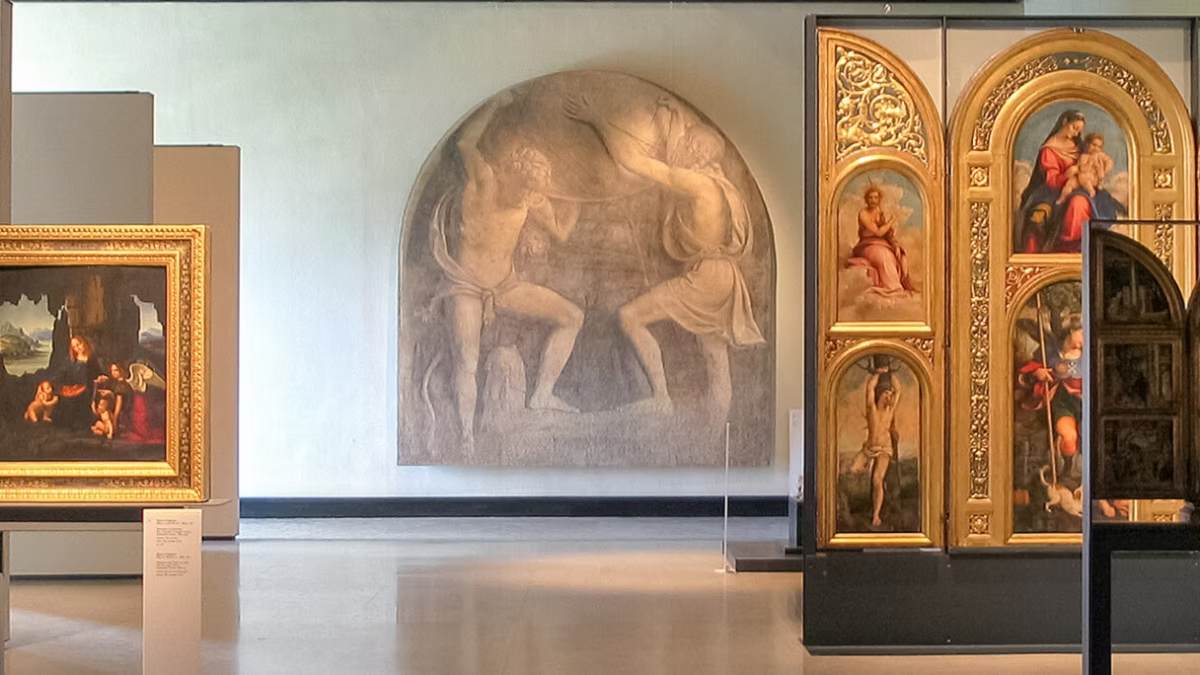
A single combined ticket (about €5) covers all of the Musei del Castello Sforzesco: the Museum of Ancient Art with Michelangelo’s Rondanini Pietà and Leonardo’s Sala delle Asse, the Pinacoteca picture gallery, the Museum of Decorative Arts, the Museum of Musical Instruments, the Egyptian Museum, the Prehistoric and Protohistoric collections, and the Museum of Wooden Sculpture and Furniture. The Achille Bertarelli print collection and the Trivulziana library are also part of the castle but work mainly as research collections, viewable by appointment rather than as part of the general walk-through visit.
Sforza Castle’s museums are not one museum but a cluster of them, spread across the Corte Ducale and the Rocchetta, all opened by the same low-cost ticket. That’s good value, but it also means visitors often either rush past rooms worth lingering in or spend an hour hunting for a gallery that turns out to be closed for the day. This guide goes collection by collection: what each one holds, its real highlights, how long it deserves, and which ones to put first if your time is limited.
For hours, closing days, and how to buy the ticket, see our guides to the Sforza Castle museum hours and ticket prices. This page focuses purely on what’s inside each collection.
The Museums at a Glance
| Collection | What it holds | Time needed | Priority |
|---|---|---|---|
| Museum of Ancient Art | Rondanini Pietà, sculpture, arms & armor, Sala delle Asse | 45–60 min | Essential |
| Pinacoteca | Paintings, 14th–18th century | 30–40 min | High |
| Egyptian Museum | Egyptian antiquities | 20–30 min | Medium |
| Prehistoric & Protohistoric collections | Bronze Age & Iron Age finds | 15–20 min | Medium |
| Museum of Decorative Arts | Furniture, ceramics, textiles, ivories | 20–30 min | Medium |
| Museum of Musical Instruments | Historic instruments | 15–20 min | Low–Medium |
| Museum of Wooden Sculpture & Furniture | Carved wood, furniture | 15–20 min | Low |
| Bertarelli print collection & Trivulziana library | Prints, drawings, manuscripts | Appointment only | Researchers |
All rows except the last are open to any visitor on the standard combined ticket, Tuesday to Sunday. Add these up and a thorough visit runs close to three hours, broken down further below.
Museum of Ancient Art (Museo d’Arte Antica)
The Museum of Ancient Art is the castle’s largest and most essential collection, spanning the ground floor of the Corte Ducale. It holds Michelangelo’s unfinished Rondanini Pietà, medieval and Renaissance sculpture, funerary monuments, arms and armor, and — when open — Leonardo’s Sala delle Asse.
This is the collection most people mean when they picture “the Sforza Castle museums,” and it’s the one to prioritize if you only see one. It occupies a long run of ground-floor rooms around the Corte Ducale and covers Lombard sculpture and applied art from the early Middle Ages through the Renaissance.
Rondanini Pietà. Michelangelo’s last work, left unfinished at his death in 1564, is displayed on its own in the rooms of the former Spanish Hospital (Ospedale Spagnolo), a space built specifically to give the sculpture room to breathe. It’s a very different Pietà from his famous St. Peter’s version — rougher, more abstract, with the figures of Christ and the Virgin nearly fused into one block of marble. Most visitors find it the single most moving thing in the castle; our dedicated guide to the Rondanini Pietà covers its history and how to see it well.
Sculpture and funerary monuments. The galleries leading up to the Pietà hold Lombard Romanesque and Gothic sculpture, city gates and portals rescued from demolished Milanese buildings, and Renaissance funerary monuments carved for the Sforza court and its circle. Among the portrait and tomb sculpture connected to the ducal family is material linked to Bona of Savoy (Bona di Savoia), the Duchess of Milan who ruled as regent after her husband Galeazzo Maria Sforza was assassinated in 1476 — a reminder that the collection is as much about Milan’s Sforza-era history as its art.
Arms and armor. Several rooms are given over to arms, armor, and militaria, reflecting the castle’s original role as a fortress and later as an Austrian and Spanish garrison.
Sala delle Asse. Leonardo da Vinci’s painted room, with its ceiling of interlacing mulberry branches, sits within this same wing. Be honest with yourself about access: the room is frequently closed for restoration or limited to timed slots, so treat it as a bonus rather than something to plan your whole visit around. Check current access before you go, and see our dedicated Sala delle Asse guide for the latest on openings.
Budget 45 minutes to an hour for this museum alone if you want to see the Pietà properly and not rush the sculpture rooms; add 10–15 minutes if the Sala delle Asse happens to be open.
Pinacoteca (Picture Gallery)
The Pinacoteca del Castello Sforzesco is the castle’s painting collection, with roughly 1,500 works spanning the 14th to 18th centuries, strongest in Lombard and Venetian Renaissance painting.
Housed in a sequence of former ducal apartments upstairs, the Pinacoteca traces Lombard and Venetian painting across four centuries. Highlights generally include Andrea Mantegna’s Trivulzio Madonna, works by Lombard masters such as Vincenzo Foppa and Bramantino, and pieces attributed to the wider circle of Venetian painters including Bellini and Lorenzo Lotto. Later rooms hold 18th-century view painting and decorative ceiling fragments moved here from demolished Milanese palazzi, including work associated with the Tiepolo workshop.
It’s a quieter, more scholarly stop than the Museum of Ancient Art, and rewards visitors with an interest in Italian painting more than casual sightseers. Allow 30–40 minutes for a proper look, less if you’re moving quickly through and stopping only at the labeled highlights.
Egyptian Museum (Museo Egizio del Castello Sforzesco)
The castle’s Egyptian Museum, part of Milan’s civic archaeological collections, displays sarcophagi, funerary objects, statuary, and everyday artifacts from ancient Egypt in purpose-built underground galleries in the Rocchetta.
Set in modern, atmospherically lit underground spaces within the Rocchetta (the castle’s innermost, most fortified courtyard), this collection is one of the more surprising things to find inside a medieval Italian fortress. It holds sarcophagi and mummy cases, funerary and votive objects, small statuary, and everyday items illustrating daily life and burial customs in ancient Egypt. It’s smaller than a dedicated national Egyptian museum, but well displayed, and popular with families and kids because it’s visually dramatic and doesn’t require reading long wall texts to enjoy. Plan on 20–30 minutes.
Prehistoric and Protohistoric Collections
Adjoining the Egyptian Museum in the Rocchetta, the Prehistoric and Protohistoric collections cover the archaeology of Lombardy and northern Italy from the Stone Age through the Bronze and Iron Ages.
This collection is easy to combine with the Egyptian Museum since both sit in the same renovated underground wing of the Rocchetta. It presents finds from prehistoric and early historic settlements around Milan and Lombardy — stone tools, pottery, metalwork, and grave goods that trace the region’s archaeology long before the Sforza or even the Romans arrived. It’s a niche interest for most visitors but genuinely well curated, and worth 15–20 minutes if you’re already in the Egyptian Museum’s wing.
Museum of Decorative Arts (Museo delle Arti Decorative)
The Museum of Decorative Arts covers furniture, ceramics, glass, textiles, tapestries, ivories, and goldsmith work from the medieval period through the 18th century.
Spread across several upper-floor rooms, this collection gathers the applied and decorative arts that don’t fit neatly into painting or sculpture: ceramics and maiolica, glasswork, tapestries and textiles, ivories, clocks, and metalwork. It’s a good stop for anyone interested in period furnishings and craftsmanship rather than fine art in the narrow sense, and it helps fill out a picture of how the Sforza court and later Milanese households actually lived. Allow 20–30 minutes.
Museum of Musical Instruments
The Museum of Musical Instruments holds a collection of historic instruments, including rare stringed and keyboard instruments from Renaissance and Baroque Italy.
A smaller, specialist collection housed in its own rooms, this museum displays instruments spanning several centuries, with particular strength in string and keyboard instruments from the Italian Renaissance and Baroque periods. It’s a quick but worthwhile detour for anyone with an interest in music history or instrument making; most general visitors give it 15–20 minutes.
Museum of Wooden Sculpture and Furniture
This museum focuses on carved wood — sculpture and furniture — from the medieval period through the 18th century, complementing the stone and marble sculpture in the Museum of Ancient Art.
A smaller collection that’s easy to miss on a first visit, this museum groups wooden sculpture (much of it devotional, from churches and chapels) alongside furniture pieces, showing techniques and styles that don’t survive as well as stone or bronze work from the same eras. It rewards visitors who enjoyed the Museum of Ancient Art and want to see how wood carving developed alongside marble sculpture. Give it 15–20 minutes if you have time; it’s the first thing to skip if you’re short on it.
Achille Bertarelli Print Collection and the Trivulziana Library
The Raccolta delle Stampe Achille Bertarelli (print collection) and the Biblioteca Trivulziana (manuscript library) are both housed within Sforza Castle, but they function as research collections with reading rooms, not as galleries on the general visitor route.
These two are worth knowing about, but they’re a different kind of visit. The Bertarelli print collection is one of Italy’s largest holdings of prints, engravings, and graphic ephemera, used mainly by scholars and occasionally drawn on for temporary exhibitions elsewhere in the castle. The Trivulziana is a historic manuscript library whose holdings include a notebook by Leonardo da Vinci (the Codex Trivulzianus) among other medieval and Renaissance manuscripts. Both are accessed through their reading rooms, generally by appointment, and are not part of the walk-through galleries covered by the standard combined ticket. Unless you have a specific research reason to visit, don’t plan your trip around them — check the official site if you do need access.
How Much Time to Budget
A thorough visit to every open collection takes roughly 2.5 to 3 hours. A focused visit hitting only the Museum of Ancient Art and the Pinacoteca can be done in about 75–90 minutes.
Add up the individual estimates above and a complete tour of every collection, moving at a comfortable pace, runs close to three hours — long enough that most visitors don’t attempt all of it in one go, especially if the castle’s grounds and courtyards are also on the itinerary. If you’re planning a half-day or full-day visit around the whole site, our itinerary guide and how long to visit guide both help you build a realistic schedule.
Which Museums to Prioritize
If your time is limited, prioritize in this order:
- Museum of Ancient Art — the Rondanini Pietà alone justifies the ticket price, and the sculpture galleries are the castle’s core collection.
- Pinacoteca — the best painting collection on site, and a natural pairing with the Museum of Ancient Art since they’re both on the ground/upper floors of the Corte Ducale.
- Egyptian Museum — the most visually striking of the “smaller” collections and a good option with kids.
- Sala delle Asse — only if it’s open when you visit; check ahead rather than counting on it.
- Everything else — the Prehistoric collections, Museum of Decorative Arts, Museum of Musical Instruments, and Museum of Wooden Sculpture and Furniture — for visitors with a couple of hours to spare and a genuine interest, or on a repeat visit.
Since one ticket covers all of it, there’s no financial reason to skip any collection — only a time one. For a wider view of everything worth seeing inside the walls, including the free courtyards, see our guide to what to see inside Sforza Castle.
Frequently Asked Questions
How many museums are inside Sforza Castle?
The combined ticket covers seven walk-through collections: the Museum of Ancient Art, the Pinacoteca, the Museum of Decorative Arts, the Museum of Musical Instruments, the Egyptian Museum, the Prehistoric and Protohistoric collections, and the Museum of Wooden Sculpture and Furniture. The Bertarelli print collection and Trivulziana library are also part of the castle but work as research collections rather than general galleries.
Do I need separate tickets for each museum?
No. A single combined ticket, about €5 full price, covers every walk-through collection in one visit on the same day. You don’t need to choose or pay separately for any of them.
Which museum has the Rondanini Pietà?
Michelangelo’s Rondanini Pietà is displayed in the Museum of Ancient Art, in dedicated rooms within the former Spanish Hospital. It’s the single most visited work in the castle’s collections.
Is the Sala delle Asse open to visit?
It’s open at times but frequently closed for restoration or limited to timed access, since the fresco is fragile. Don’t count on seeing it — check current access on the official site before you go.
Can I visit the Bertarelli print collection or the Trivulziana library as a regular tourist?
Generally not as part of a standard visit. Both function as research collections with reading rooms, typically accessed by appointment for study purposes, rather than galleries on the general museum route.
Which museum should I see if I only have an hour?
Go straight to the Museum of Ancient Art for the Rondanini Pietà and sculpture galleries, then spend any remaining time in the Pinacoteca next door. That combination covers the two strongest collections in the castle.
Are the museums good for kids?
The Egyptian Museum tends to be the most engaging for children because of its dramatic underground setting and visual objects like sarcophagi. The Museum of Ancient Art’s arms and armor rooms also tend to hold kids’ attention. See our Sforza Castle with kids guide for a fuller family plan.
Are the museums free on any day?
Yes — the museums are free on the first Sunday of every month, and always free for under-18s. Expect larger crowds on free days, so arrive close to opening.
Do the museums close on Mondays?
Yes, all of the castle’s museums close on Mondays, while the free courtyards and grounds stay open. See our opening hours guide for the full schedule.
Is the museum ticket worth it?
At around €5 for seven collections, including a Michelangelo, it’s widely considered good value even for a short visit. Our is Sforza Castle worth it guide weighs this in more detail against other things to do in Milan.
