

Sforza Castle Free Entry: What’s Free vs What You Pay For
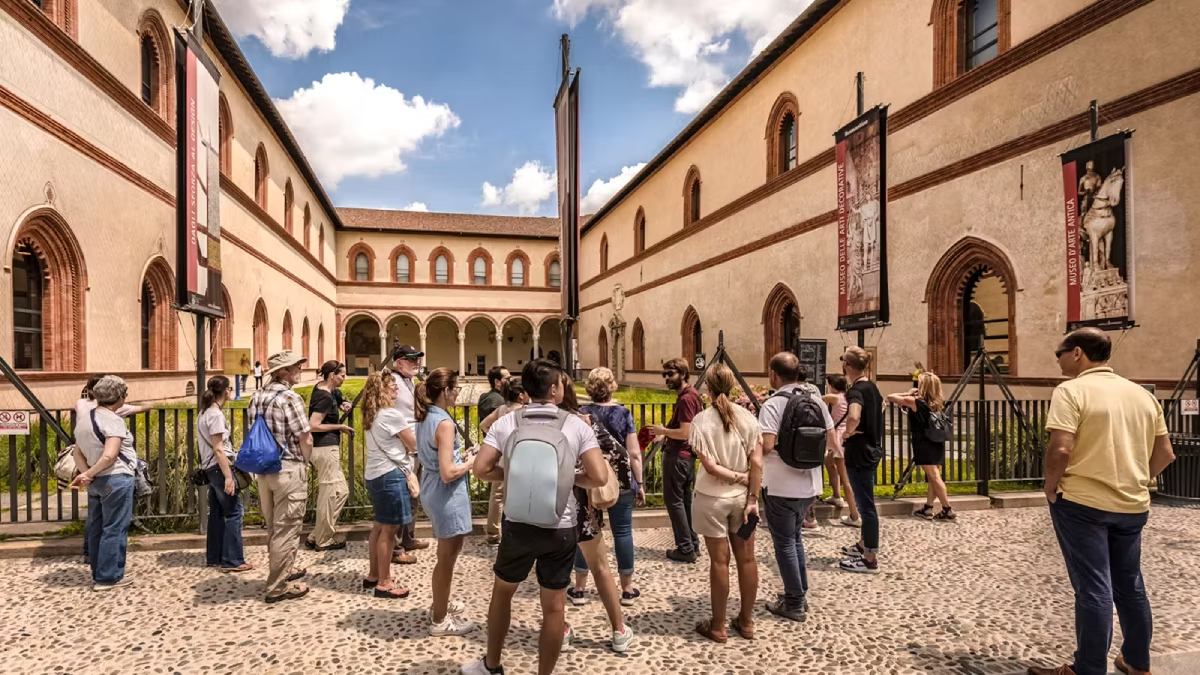
Most of Sforza Castle is free, every day: the courtyards, ramparts, grounds, Piazza d’Armi, and the walk through to Parco Sempione cost nothing and need no ticket. Only the museums inside — including the Rondanini Pietà — require the paid combined ticket, though even that is free on the first Sunday of the month, for under-18s, and for a few other reduced categories. Understanding the split before you go means you won’t pay for anything you didn’t need to.
Sforza Castle has a reputation as a paid attraction, but that’s only half true. The castle itself — its walls, courtyards, and grounds — is open and free to everyone, all year round, with no ticket, queue, or booking required. What you pay for is the museums inside, and even those have several ways to get in for free.
This guide separates exactly what’s free from what’s paid, explains the first-Sunday-of-the-month free scheme and who else qualifies for free entry, and covers how free days affect the crowds so you can decide whether it’s worth timing your visit around one.
What’s Free at Sforza Castle
The courtyards, ramparts, and open grounds of Sforza Castle are free to enter at any time, with no ticket needed. That includes crossing the Piazza d’Armi, walking the perimeter along the old ramparts, passing under the Filarete Tower, and continuing through to Parco Sempione behind the castle.
The free part of the castle is not a small corner — it’s most of the site. You can walk in from Piazza Castello, pass beneath the Filarete Tower, and find yourself in the vast Piazza d’Armi, the great parade courtyard, without paying anything or showing a ticket. From there the Corte Ducale and the outer stretches around the Rocchetta are also open to walk through, along with the ramparts (Ghirlanda) that ring the fortress and the corner bastions. None of this requires a booking, and none of it closes on Mondays, when the museums do.
The free grounds also connect directly to Parco Sempione, Milan’s large park behind the castle, so you can walk straight from the Filarete Tower through the courtyards and out the back into green space and toward the Arco della Pace without ever needing a ticket. This makes the castle one of the easiest “free things to do” in central Milan — you can spend an hour photographing the architecture, sitting in the Piazza d’Armi, or cutting through to the park, and pay nothing at all.
What’s free, specifically:
- The courtyards (Piazza d’Armi, Corte Ducale, and the approach to the Rocchetta)
- The ramparts and bastions
- The grounds and gardens around the castle’s exterior
- Passing through the Filarete Tower and the other gates
- The walk from the castle grounds through to Parco Sempione
What’s Paid: The Museums
The only part of Sforza Castle that requires a ticket is the group of museums inside — the Musei del Castello Sforzesco — covered by one combined ticket. That includes the Museum of Ancient Art, the Pinacoteca, the Museum of Decorative Arts, the Museum of Musical Instruments, the Egyptian Museum, prehistoric collections, and the room holding Michelangelo’s Rondanini Pietà.
Everything indoors and displayed as a collection falls under the paid museums. A single combined ticket (around €5 full price, €3 reduced — confirm current pricing on the official site) covers all of them on one visit, so you’re not buying separate admissions for each collection. This includes the Museum of Ancient Art, the Pinacoteca (picture gallery), the Museum of Decorative Arts, the Museum of Musical Instruments, the Egyptian Museum, the prehistoric collections, and — when open — Leonardo da Vinci’s Sala delle Asse, the frescoed hall that is frequently closed for restoration, so don’t count on it being accessible without checking ahead.
The distinction is simple to remember: if it’s a room with glass cases, paintings on the wall, or a dedicated collection, it’s inside the paid museums. If it’s a courtyard, a rampart walk, or open sky above you, it’s free. For full pricing detail across categories, see our ticket prices guide; for what’s actually on display once you’re inside, see the museums overview.
Is the Rondanini Pietà Ever Free?
Michelangelo’s Rondanini Pietà — his last, unfinished work — is displayed inside the museums, in the former Spanish Hospital space, so it follows the same rules as the rest of the collection: it’s included in the paid combined ticket, and it’s free whenever the museums themselves are free. That means the Pietà is free on the first Sunday of the month, free for under-18s, and free under any of the other reduced-entry categories that apply to the museums. There’s no separate charge or separate free scheme just for the Pietà — it’s simply one exhibit within the museum admission, so seeing it costs nothing more (or less) than seeing the rest of the collection.
The First Sunday of the Month: Free for Everyone
On the first Sunday of every month, the Sforza Castle museums are free to enter for all visitors, regardless of age or nationality. The free grounds are, as always, free the rest of the time too, so a first-Sunday visit is the one day you can see both the courtyards and the full museum collection without paying anything.
Italy’s state and municipal museums, including the Musei del Castello Sforzesco, waive admission on the first Sunday of each month as part of a national free-museum-day scheme. On that day, anyone can walk into the museums — the Pinacoteca, the Egyptian Museum, the Rondanini Pietà room, and the rest — without buying a ticket. It’s one of the best-value days to visit if your goal is to see everything inside the castle for free, though it comes with a real trade-off in crowding (more on that below).
Because the scheme applies to state and municipal sites broadly, exact confirmation for your visit date is worth a quick check on the official castle website before you go, especially around holidays when dates can occasionally shift.
Free for Under-18s and Other Reduced Categories
Museum entry at Sforza Castle is free for visitors under 18, regardless of the day of the week, so families with children and teenagers don’t pay for the museums at all — only accompanying adults need a ticket. Beyond that, the reduced ticket category (roughly €3 instead of the full ~€5) typically covers groups such as students, seniors, and other categories defined by the museum’s own rules; these can change, so it’s worth checking the official site for the current list of who qualifies and what proof (ID, student card) is needed at the door.
The free grounds, of course, need no age check or ID at all — anyone can walk the courtyards and ramparts for free, at any age, any day.
Free Late-Afternoon or Evening Windows
Some Italian museums offer occasional free or discounted access during late-afternoon or evening hours on specific days, and Sforza Castle’s museums have, at times, offered something similar. This isn’t a fixed, guaranteed daily window, and it varies by season and by year, so we won’t overstate it here: don’t plan a visit around a free evening slot without confirming it’s actually running on your date via the official Castello Sforzesco website. If it is available, it tends to be lightly used compared with the first Sunday, since fewer visitors know about it.
How Free Days Affect Crowds
The first Sunday of the month is noticeably busier inside the museums than a typical paid day, with longer waits at the entrance and fuller galleries, especially around the Rondanini Pietà. The free grounds don’t see the same spike, since they’re free and open every day anyway, so the courtyards and ramparts stay relatively calm even on free-museum Sundays.
Free days concentrate demand. Because the museum ticket normally costs only a few euros, the financial incentive to visit specifically on the first Sunday is smaller than at many other attractions — but it’s still enough to draw a noticeably larger crowd, particularly families and local visitors who plan around it. Expect a queue at the museum entrance that doesn’t exist on a normal Tuesday, and busier rooms throughout the day, especially in the smaller spaces like the Pietà room. If you go on a free Sunday, arriving right at opening (10:00 AM) gives you the best chance of a calmer visit before the crowds build.
If you’d rather see the museums without the crowds and don’t mind paying the modest admission fee, any other Tuesday–Sunday morning is a far quieter alternative. The free grounds, by contrast, are busy or quiet based on ordinary factors like time of day and season, not on whether it’s a free-museum Sunday, since they cost nothing on every day of the year.
Making the Most of a Free Visit
If your budget is the priority, you can have a full, satisfying visit to Sforza Castle without spending a cent: walk in through the Filarete Tower, cross the Piazza d’Armi, explore the ramparts and bastions, and continue through to Parco Sempione and the Arco della Pace. Add the museums only if you want to see the Rondanini Pietà, the Pinacoteca, or the other collections — and even then, timing your visit for the first Sunday of the month, or bringing along anyone under 18, can make that part free too.
For visitors who do want the museums but prefer a reserved, skip-the-line entry with a digital audio guide rather than relying on a free day, the entry ticket is the straightforward paid option, and the Pietà Rondanini tour adds guided context specifically on Michelangelo’s last work.
Frequently Asked Questions
Is Sforza Castle free to enter?
The courtyards, ramparts, and grounds are free to enter every day, with no ticket required. Only the museums inside — the Musei del Castello Sforzesco — require a paid ticket, and even those are free under certain conditions like the first Sunday of the month or for under-18s.
What exactly is free at Sforza Castle?
The Piazza d’Armi, the Corte Ducale, the ramparts and bastions, the general grounds, and the walk from the Filarete Tower through to Parco Sempione are all free. Anything displayed inside a museum collection, including the Rondanini Pietà, falls under the paid ticket instead.
Is the Rondanini Pietà free to see?
The Rondanini Pietà is inside the paid museums, so normally it requires the combined museum ticket. It becomes free whenever the museums are free — on the first Sunday of the month, for under-18s, and under any other reduced-entry category that applies.
When is Sforza Castle free for everyone?
The museums are free for all visitors on the first Sunday of every month, as part of Italy’s national free-museum-day scheme. The grounds and courtyards, by contrast, are free every single day of the year, not just on the first Sunday.
Are the museums free for kids?
Yes, visitors under 18 enter the Sforza Castle museums for free, on any day of the week, not only on the first Sunday. Only accompanying adults over 18 need to buy a ticket.
Is there a free evening or late-afternoon entry window?
Some free or discounted late-afternoon windows have applied at times, but this isn’t a fixed daily guarantee and varies by season and year. Check the official Castello Sforzesco website close to your visit date before planning around one.
Does the free first Sunday get crowded?
Yes, the museums are noticeably busier on the first Sunday of the month, with longer entrance queues and fuller galleries than a typical weekday. The free grounds don’t see the same increase, since they’re free on every other day too, so they stay relatively calm.
Do I need to book anything for the free parts of the castle?
No. The courtyards, ramparts, and grounds need no ticket, booking, or reservation at any time. Just walk in through the Filarete Tower and explore.
Can I walk from Sforza Castle to Parco Sempione for free?
Yes, the free grounds lead directly through to Parco Sempione behind the castle, and the whole route, including the park itself, costs nothing to walk. It’s one of the easiest free additions to a castle visit.
Are there other reduced-price categories besides under-18s?
Yes, the museums also offer a reduced ticket price for categories such as students and seniors, in addition to the free first Sunday and free under-18 entry. Exact categories and required proof can change, so check the official site for the current list.
