

What to See Inside Sforza Castle: Complete Highlights Guide
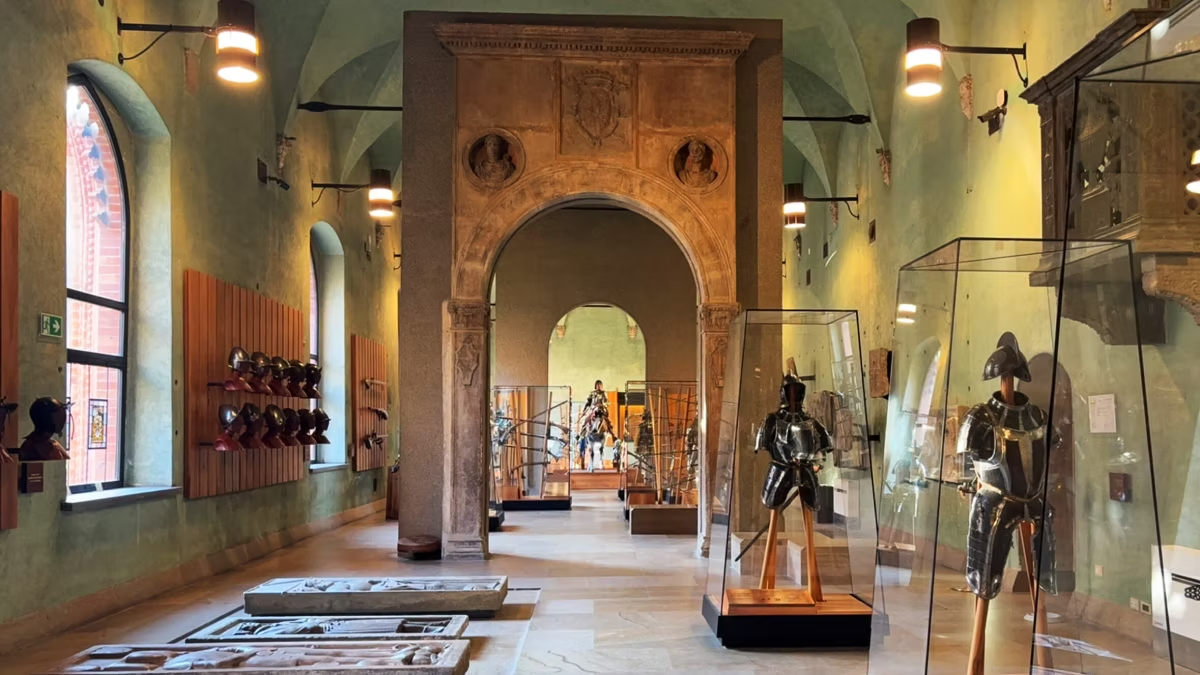
Sforza Castle splits into two free-to-enter courtyards and ramparts you can walk any day, and ticketed museums that hold the real treasures — Michelangelo’s unfinished Rondanini Pietà, Leonardo’s Sala delle Asse ceiling, the Pinacoteca, and collections of ancient art, musical instruments, Egyptian artifacts, decorative arts, and prehistory. One combined ticket (about €5) covers every museum, and a couple of hours lets you see the highlights of both the free and paid sides.
Sforza Castle is less a single sight than a small city of them: three linked courtyards, a skyline of towers and bastions, a walkable rampart, and — behind heavy museum doors — one of the richest small-museum complexes in Italy. Because so much of it is free, it’s easy to wander through, admire the architecture, and leave without ever realizing the Rondanini Pietà was thirty meters away.
This guide works through everything worth seeing inside the castle, free and ticketed, in the order you’re likely to encounter it, with a prioritized “don’t miss” list and a suggested route that ties it all together on one visit.
Free vs. Ticketed: The Two Sides of the Castle
The castle’s courtyards, towers, ramparts, and grounds are entirely free and open daily; only the museums inside require a ticket. You can spend a full visit outdoors and pay nothing, or add the roughly €5 museum ticket to see the Rondanini Pietà, the Sala delle Asse, and the rest of the collections.
This is the single most useful thing to understand before you go: walking through the Filarete Tower, crossing the Piazza d’Armi, exploring the Corte Ducale and Rocchetta, and climbing onto the ramparts costs nothing and needs no ticket. The museums — housed around the Rocchetta and Corte Ducale — are where the admission fee applies, and they’re where Michelangelo’s last work and Leonardo’s only surviving large-scale interior decoration live. Our free entry guide breaks down exactly what’s free versus paid in more detail.
The Free Highlights: Courtyards and Towers
Piazza d’Armi
The Piazza d’Armi is the castle’s great parade ground, the first and largest courtyard you cross after entering through the Filarete Tower. It’s an open, gravel-and-grass expanse framed by defensive walls rather than ornate architecture — a reminder that this side of the castle was built for troops and horses, not court life. It’s also the space that leads straight through to Parco Sempione on the far side.
Corte Ducale
Beyond the Piazza d’Armi, the Corte Ducale is the elegant courtyard of the ducal residence, with arcaded walkways and the architectural refinement missing from the parade ground. This is the transition point from military fortress to Renaissance court, and most of the museum entrances open directly onto it.
Rocchetta
The Rocchetta is the innermost and most fortified courtyard, the keep-within-the-keep where the Sforza family could retreat if the outer defenses fell. Its arcades hold some of the most delicate architectural detail in the complex, and several museum wings, including the Sala delle Asse, open off it. Our dedicated courtyards guide covers the history and layout of all three in depth.
Filarete Tower
The tall central tower over the main gate facing Piazza Castello is the Filarete Tower, the castle’s best-known image and the point most visitors walk through without a ticket. The original collapsed in 1521 and stood in ruins for centuries; the tower seen today is a 1905 reconstruction by architect Luca Beltrami, based on historical images and Filarete’s original design. It’s worth pausing under the archway and looking up before you press on into the courtyards. The towers guide also covers the Bona of Savoy Tower and the corner bastions.
The Ticketed Highlights: Museums Worth the Admission
One combined museums ticket, priced at roughly €5 full price, covers every collection inside Sforza Castle — the Rondanini Pietà, Sala delle Asse, Pinacoteca, and the ancient art, musical instrument, Egyptian, decorative arts, and prehistoric museums. There’s no need to choose between them; a single ticket and a couple of hours gets you into all of it.
Michelangelo’s Rondanini Pietà
The single most important artwork in the castle is Michelangelo’s Rondanini Pietà, his last work, left unfinished at his death in 1564. It’s displayed in the former Spanish Hospital wing, in a room designed specifically to give the sculpture space and quiet. Unlike his earlier, polished Pietàs, this one is raw and unresolved — figures emerging from stone rather than fully carved — which is exactly why many visitors find it the most moving piece in the castle. It’s the headline reason many people buy the museum ticket at all, and it’s covered in detail in our Rondanini Pietà guide.
Leonardo’s Sala delle Asse
The Sala delle Asse is a chamber in the Rocchetta with a ceiling painted by Leonardo da Vinci to look like a bower of interwoven mulberry trees, their branches knotting together across the vault. It’s the closest thing Milan has to a Leonardo fresco you can stand beneath, and it’s genuinely rare — one of the few large-scale decorative works by him that survives in place. Be honest with yourself about access before you go: the room is frequently closed for restoration or conservation work for extended periods, so confirm current access on the official site rather than assuming it will be open. Full details, including what to do if it’s closed, are in our Sala delle Asse guide.
The Pinacoteca
The Pinacoteca, the castle’s picture gallery, holds paintings spanning several centuries of Lombard and Italian art, including works attributed to Mantegna, Bellini, Titian, and other major names. It’s a proper museum-scale collection rather than a side room, and worth a slower pass if painting is your main interest.
Museum of Ancient Art
The Museum of Ancient Art occupies the ground-floor rooms around the Corte Ducale and Rocchetta, tracing sculpture and funerary art from the medieval period into the Renaissance. The Rondanini Pietà is technically part of this collection, though it’s often treated as its own stop given its significance.
Museum of Musical Instruments
A quieter but rewarding stop, the Museum of Musical Instruments displays historic string, wind, and keyboard instruments, many finely crafted and centuries old. It’s less crowded than the Pinacoteca or the Pietà room, making it a good choice if you want a calmer pace partway through the visit.
Egyptian Museum
The Egyptian Museum is a compact but well-presented collection of Egyptian artifacts, sarcophagi, and funerary objects, one of the lesser-known reasons to buy the combined ticket. It’s a good stop for kids on a family visit, adding variety after the older-master paintings.
Museum of Decorative Arts
The Museum of Decorative Arts covers furniture, tapestries, ceramics, and applied arts largely from the Renaissance and Baroque periods — a useful counterpoint to the painting and sculpture collections elsewhere in the castle, showing how the same eras looked in everyday craft and design.
Prehistoric Collections
The prehistoric collections trace human settlement in the Milan area back well before the Sforza or even the Romans, with tools, pottery, and early artifacts. It’s a smaller stop, but it rounds out the sense that this site has layers of history stacked far deeper than the current 15th-century castle.
For a full breakdown of what’s in each room and how the museum wings connect, see our complete museums guide.
The Ramparts and the Ghirlanda
Around the outer edge of the castle, a walkable stretch of fortified wall known as the Ghirlanda lets you get up onto the ramparts for a different view of the courtyards and the city skyline beyond. It’s free, often overlooked, and a good way to get some perspective on the scale of the fortifications before or after the museums. Our ramparts walk guide covers the route and what to look for.
Behind the Castle: Parco Sempione
Passing straight through the Piazza d’Armi and out the back of the castle brings you into Parco Sempione, Milan’s largest central park, with the Arco della Pace (Arch of Peace) at its far end. It’s not technically part of the castle, but the two flow into each other so naturally that most visitors treat a walk through the park as a natural extension of the castle visit — worthwhile if you have any extra time. See our Parco Sempione guide for the layout and what else is inside it.
Don’t Miss: A Prioritized List
If time or budget is tight, prioritize in roughly this order:
- The Filarete Tower and Piazza d’Armi — free, unmissable, and the first thing you see.
- Michelangelo’s Rondanini Pietà — the single most important reason to buy the museum ticket.
- The Corte Ducale and Rocchetta — free, and the architectural heart of the complex.
- The Pinacoteca — the deepest single collection if you enjoy painting.
- Leonardo’s Sala delle Asse — extraordinary if open; confirm access before counting on it.
- The ramparts walk — free, quick, and a good way to see the castle from above.
- The Egyptian Museum, Museum of Musical Instruments, decorative arts, and prehistoric collections — worth it if you have the combined ticket and the time, roughly in that order of general interest.
- Parco Sempione — free, and a natural way to close out the visit.
How It All Connects: One Ticket, One Route
The good news is that none of this requires separate planning. The free grounds have no ticket at all, and a single combined museums ticket, bought at the door or in advance, covers every museum listed above — there’s no need to pick and choose collections. Our ticket prices guide covers current pricing and reductions, and the entry ticket product includes a reserved time slot and digital audio guide if you’d rather not queue.
A sensible route: enter through the Filarete Tower, cross the Piazza d’Armi, pause at the Corte Ducale, then head into the museum wings around the Rocchetta — starting with the Rondanini Pietà and Sala delle Asse (if open) since they’re the most in-demand, then working through the Pinacoteca and the smaller collections at your own pace. Finish with a loop onto the ramparts, then exit through the back toward Parco Sempione if you have time left. Budget at least two hours for the museums alone, longer if you like to read the labels; our how long to visit guide has fuller timing guidance, and the suggested itinerary lays out a complete visit hour by hour. Remember the museums close on Mondays and keep shorter hours than the grounds — check our opening hours guide before you go.
Frequently Asked Questions
What is the most important thing to see inside Sforza Castle?
Michelangelo’s Rondanini Pietà, his final and unfinished work, is generally considered the single most important piece in the castle. It’s displayed in its own dedicated room in the Museum of Ancient Art and is the main reason most visitors buy the museum ticket.
Do I need a ticket to see the courtyards?
No. The Piazza d’Armi, Corte Ducale, and Rocchetta courtyards, along with the Filarete Tower and the ramparts, are free and open daily. You only need a ticket for the museums inside.
Is the Sala delle Asse always open?
Not always. Leonardo’s painted ceiling room is frequently closed for restoration or conservation, sometimes for extended periods, so confirm current access on the official site before you go rather than assuming it will be open on your visit.
How many museums are inside Sforza Castle?
The combined ticket covers the Museum of Ancient Art (including the Rondanini Pietà), the Pinacoteca, the Museum of Musical Instruments, the Egyptian Museum, the Museum of Decorative Arts, the prehistoric collections, and the Sala delle Asse when it’s open — seven collections in total under one admission.
Can I see everything with one ticket?
Yes. A single combined museums ticket, priced at roughly €5 full price, covers every museum and collection inside the castle. There’s no need to buy separate tickets for the Pietà, the Pinacoteca, or any other individual collection.
How long does it take to see the highlights?
Budget at least two hours to see the free courtyards and the main museum highlights without rushing, and closer to three if you want to see every collection and read the exhibit labels. A quick pass through just the free grounds can take as little as 30 to 45 minutes.
What can I see inside the castle for free?
The Piazza d’Armi, Corte Ducale, Rocchetta courtyards, the Filarete Tower, the corner bastions, and the ramparts walk are all free, along with the view through to Parco Sempione behind the castle. Only the museum collections require the paid ticket.
Is Leonardo da Vinci’s work inside Sforza Castle?
Yes. The Sala delle Asse ceiling, painted by Leonardo da Vinci with an interlocking pattern of mulberry branches, is inside the Rocchetta and is one of the very few large-scale decorative works by him still in its original location, when the room is open to visitors.
What is in the Egyptian Museum at Sforza Castle?
The Egyptian Museum holds a compact collection of Egyptian artifacts, sarcophagi, and funerary objects. It’s a smaller stop than the Pinacoteca or the ancient art museum but a worthwhile addition, especially for families visiting with children.
Should I visit the museums or just the free grounds?
If you only have limited time, the free grounds — the courtyards, Filarete Tower, and ramparts — give a genuine sense of the castle’s scale and history at no cost. But the museum ticket is inexpensive relative to what it unlocks, especially the Rondanini Pietà, so most visitors find it worth the extra hour and small fee.
