

Sforza Castle to Brera Walking Route: Distance, Time & Tips
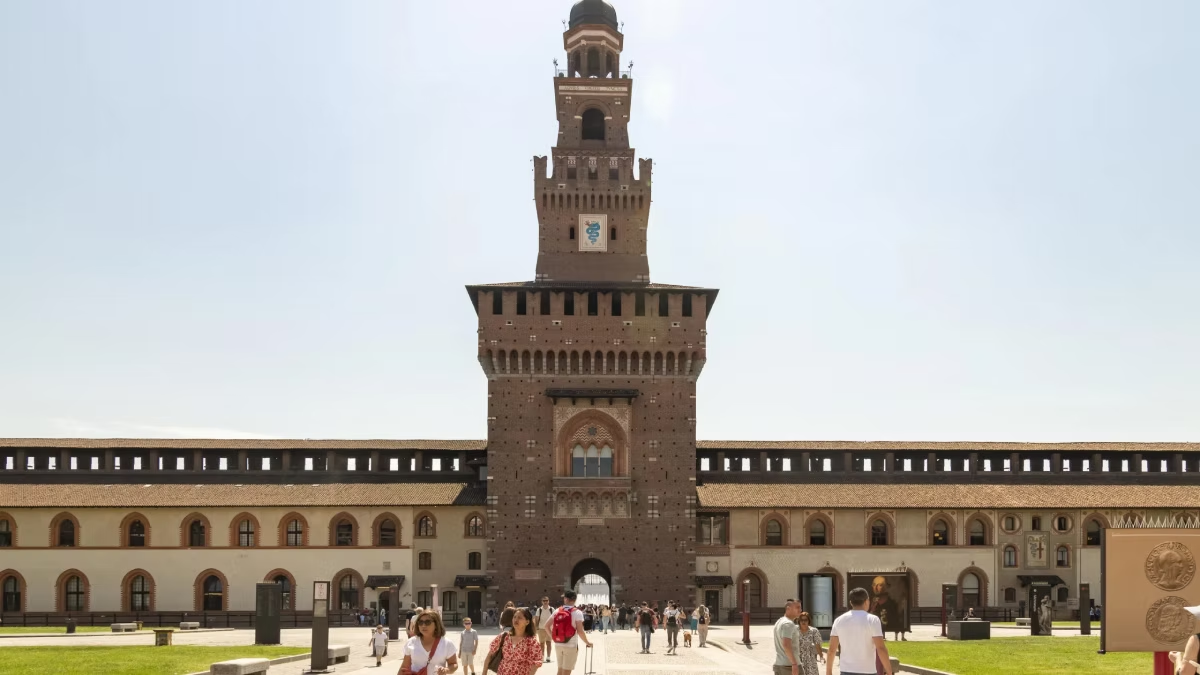
Brera is about a 10-minute, flat walk from Sforza Castle — leave through the Filarete Tower toward Via Cusani, cross into Via Tivoli near the M2 Lanza metro stop, and continue straight into Via Brera. If you’d rather not walk, the M2 (green) line runs one stop from Lanza to Moscova or Cadorna, or trams 4 and 12 cover the same stretch. Pair the two on one afternoon: castle grounds and a museum in the morning, then Brera’s galleries and cafes after lunch.
Sforza Castle and the Brera district sit close enough that most visitors do both in a single afternoon without a taxi or transit ticket. The walk is short, mostly flat, and passes through one of central Milan’s more pleasant stretches rather than a busy arterial road.
This guide covers the route step by step, what’s worth seeing once you arrive in Brera, how to combine the two neighborhoods into one visit, and the tram/metro options if you’d rather ride than walk.
How Far Is Brera From Sforza Castle?
It’s roughly 800 meters (about half a mile) from the castle’s Filarete Tower to the heart of Brera on Via Brera, which most people cover in 10 to 12 minutes at a relaxed pace. The route is flat, with sidewalks the whole way, and doesn’t require crossing any major roads with heavy traffic.
The distance is short enough that it barely counts as a detour — Brera is really an extension of the same central Milan core that includes the castle, the Duomo, and Parco Sempione. There’s no need to plan it as a separate outing; it fits naturally onto the end of a castle visit.
The Route Step by Step
From the castle’s main entrance, walk out through the Filarete Tower onto Piazza Castello, head toward Via Cusani, then bear right onto Via Tivoli near the Lanza metro stop, and continue straight — Via Tivoli feeds directly into Via Brera, the district’s main street.
- Start at the Filarete Tower. Exit the castle on the side facing the Duomo (opposite Parco Sempione) and step out onto Piazza Castello.
- Head northeast on Via Cusani. This tree-lined street runs alongside the castle’s outer wall and is a straightforward, well-signed walk with few crossings.
- Continue onto Via Tivoli. Via Cusani leads into Via Tivoli, passing close to the M2 Lanza metro station — a useful landmark to confirm you’re on track, and a fallback if you’d rather finish the trip by metro.
- Turn into Via Brera. Via Tivoli opens onto Via Brera, the district’s main pedestrian-friendly street, lined with galleries, boutiques, and cafe terraces. The Pinacoteca di Brera is a short walk further down this street.
- Wander the side streets. Brera’s real character is in the small lanes branching off Via Brera — Via Fiori Chiari, Via Madonnina, and the streets around the Botanical Garden — so give yourself time to get a little lost once you arrive.
The whole route is walkable in sneakers or ordinary shoes; there’s no steep grade and only a couple of street crossings with traffic lights.
What Brera Offers
Brera is Milan’s historic arts district, built around the Pinacoteca di Brera art museum and the Accademia di Belle Arti (fine arts academy), with a quiet Botanical Garden, cobblestone lanes of galleries and antique shops, and a dense cluster of restaurants and aperitivo bars that gets lively in the early evening.
Pinacoteca di Brera. One of Italy’s major public art galleries, housed in the Palazzo di Brera alongside the fine arts academy. The collection focuses on Italian Renaissance and Baroque painting, with major works by Raphael, Mantegna, Caravaggio, and others. It’s a separate, ticketed museum from the Sforza Castle collections — a different institution with its own admission — so budget it as its own stop rather than assuming any combined ticket applies.
Orto Botanico di Brera (Botanical Garden). A small, tucked-away botanical garden behind the Palazzo di Brera, worth a quiet ten minutes if you want a break from cobblestones and crowds. It keeps limited opening hours and is sometimes closed, so treat it as a bonus rather than a fixed stop.
Bohemian streets. Brera grew up as an artists’ quarter, and the narrow lanes — Via Fiori Chiari and Via Madonnina especially — still carry that atmosphere with small galleries, antique dealers, and independent shops, even as parts of the district have become more upscale and touristed over the years.
Aperitivo and restaurants. Brera is one of Milan’s best-known aperitivo neighborhoods, with bars along Via Brera and the side streets setting out generous buffet spreads with an evening drink from around 6 or 7 PM. It’s also dense with restaurants for lunch or dinner, ranging from casual trattorias to higher-end dining, so it works equally well as a lunch stop between sights or a dinner destination after the castle closes.
Combining the Castle and Brera in One Afternoon
A practical order is castle grounds and a museum in the late morning, a walk to Brera around midday, lunch or a coffee break there, then the Pinacoteca di Brera and the surrounding streets in the afternoon before an early aperitivo.
Because the walk between them takes about ten minutes, there’s no real cost to splitting the day this way. A typical half-day plan: arrive at the castle when the museums open at 10:00 AM, spend an hour or two in the courtyards and one or two collections (the Rondanini Pietà is a common priority), walk to Brera around midday, have lunch, then visit the Pinacoteca di Brera in the early afternoon before it gets busy toward closing time. If you’re visiting on a Monday, remember the castle’s museums are closed that day — the grounds stay open, so a Monday morning castle walk followed by a Brera afternoon still works, but skip the plan to see a specific castle museum collection.
Neither stop requires a full day, and both are more enjoyable at an unhurried pace, so resist the urge to add a third major sight onto the same afternoon.
Alternatives: Tram and Metro
The M2 (green) metro line runs from Lanza — a five-minute walk from the castle — one stop to Moscova or Cadorna, both within walking distance of Brera; trams 4 and 12 also connect the two areas along a similar path. Either option takes only a few minutes longer than walking once you account for the walk to the stop and the wait.
Walking is genuinely the simplest option given the short distance, but if it’s raining, you’re carrying bags, or you’d rather rest your feet after a morning at the castle, the M2 Lanza stop sits right on the route described above. A single standard Milan public transport ticket covers the ride, and it’s a reasonable option if you’re also planning to use the metro elsewhere that day.
Accessibility
The route between the castle and Brera follows standard city sidewalks with curb cuts at crossings and no steps or steep inclines, so it’s manageable for wheelchair users and visitors with strollers, though Milan’s cobblestones (sampietrini) appear on some stretches, particularly in Brera’s smaller lanes, and can make for a bumpier ride than smooth pavement. The M2 metro is a step-free alternative at stations with elevators, though not every Milan metro station has full step-free access, so check current accessibility information for the specific stops if that matters for your visit. Within Brera itself, the Pinacoteca di Brera and the main streets are accessible, but some of the narrowest side lanes have uneven surfaces.
Frequently Asked Questions
How far is Brera from Sforza Castle?
It’s about 800 meters, roughly a 10 to 12 minute walk at a relaxed pace, following Via Cusani and Via Tivoli into Via Brera. The route is flat with no major road crossings.
Is the walk from Sforza Castle to Brera safe and easy?
Yes. It runs through a well-lit, well-trafficked part of central Milan with sidewalks the whole way, and it’s a route many Milan residents and visitors walk daily. Daytime and early evening are both comfortable times to make the walk.
Can I combine Sforza Castle and Brera in one day?
Easily — the short walk between them makes it practical to see the castle grounds and a museum in the morning, then spend the afternoon in Brera at the Pinacoteca di Brera and the surrounding streets. Many visitors treat it as a single half-day or full-day itinerary.
What is there to do in Brera?
Brera centers on the Pinacoteca di Brera art gallery, with a small Botanical Garden, cobblestone streets of galleries and antique shops, and a dense concentration of restaurants and aperitivo bars. It’s one of Milan’s most walkable and atmospheric neighborhoods.
Is the Pinacoteca di Brera included with the Sforza Castle ticket?
No. The Pinacoteca di Brera is a separate museum with its own admission, distinct from the Musei del Castello Sforzesco inside Sforza Castle. Budget them as two separate entries.
Do I need to take the metro, or can I walk?
Walking is the simplest option given the short, flat distance, but the M2 (green) line runs from Lanza, near the castle, one stop toward Brera if you’d rather ride. Trams 4 and 12 cover a similar route.
Is the route wheelchair accessible?
The main sidewalks along Via Cusani and Via Tivoli have curb cuts and no steps, though some of Brera’s smaller lanes have uneven cobblestones. The M2 metro is a step-free alternative at stations with elevators.
What time is best to walk from the castle to Brera?
Late morning to early afternoon works well if you’re heading to the Pinacoteca di Brera, since it keeps daytime museum hours. If you’re going for aperitivo or dinner, the walk is just as pleasant in the early evening.
Is Brera busy or touristy?
Brera draws a steady mix of visitors and locals, and the main streets can get busy in the evening aperitivo hours, but the smaller side lanes stay quieter. It’s less crowded than the immediate area around the Duomo.
How long should I spend in Brera after visiting the castle?
A couple of hours covers a walk through the streets, a coffee or aperitivo stop, and a look inside the Pinacoteca di Brera, though art lovers can easily spend half a day there. Treat it as flexible depending on how much time you have left in your day.
