

Sforza Castle to the Duomo: The Complete Walking Route Guide
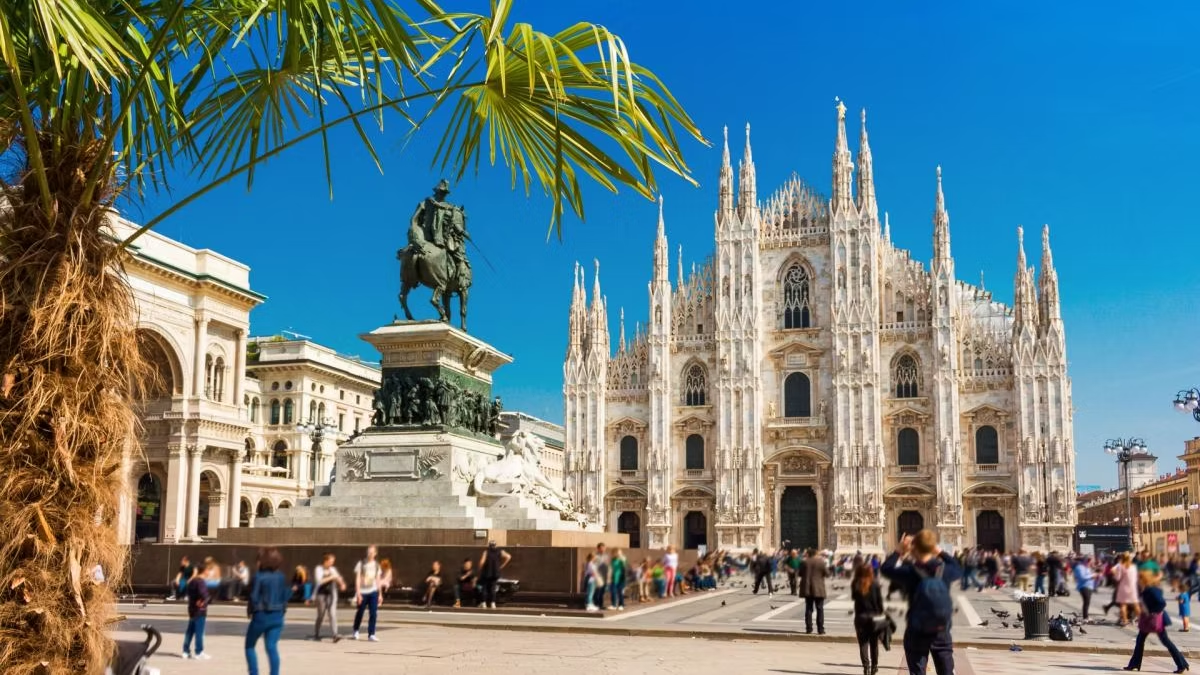
Sforza Castle to the Duomo is a flat, straightforward walk of about 1 kilometer, taking roughly 12–15 minutes at an easy pace. From the Filarete Tower, cross Piazza Castello to Largo Cairoli, then follow pedestrian Via Dante straight through Cordusio and into Piazza del Duomo. The route is almost entirely traffic-free, well-signed, and passes cafes, shops, and the Galleria Vittorio Emanuele II along the way.
Walking from Sforza Castle to the Duomo is one of the easiest and most rewarding short walks in Milan. Nearly the whole route runs down pedestrianized Via Dante, so you’re not dodging traffic, and the straight line between the two landmarks means it’s almost impossible to get lost.
This guide covers the route step by step, what you’ll pass along the way, how the walk compares to taking the metro or tram, what the pavement is like for wheelchairs and strollers, and how to time it if you’re visiting both sights in one outing.
The Route at a Glance
The walk covers about 1 kilometer in a nearly straight line: out of the castle at Largo Cairoli, down pedestrian Via Dante, through Cordusio, and into Piazza del Duomo. Budget 12–15 minutes walking, more if you stop to browse or take photos.
| Stage | Distance/Time | Surface |
|---|---|---|
| Piazza Castello → Largo Cairoli | ~150 m, 2 min | Paved plaza, flat |
| Largo Cairoli → Cordusio | ~500 m, 6–7 min | Pedestrian street (Via Dante), flat |
| Cordusio → Piazza del Duomo | ~350 m, 4–5 min | Mixed pedestrian/shared street, flat |
The whole walk is flat — Milan’s historic center has no hills to speak of — and the vast majority of it is on streets closed to general traffic, which makes it one of the more relaxed city walks you’ll do in Italy.
Step-by-Step Directions
Start at the Filarete Tower, the main gate of Sforza Castle facing Piazza Castello. With your back to the tower, walk straight ahead across the piazza toward the Cairoli metro entrance and the equestrian statues at Largo Cairoli — this takes about two minutes.
At Largo Cairoli, the wide pedestrian boulevard directly ahead is Via Dante. Head straight down it; there’s no turning required for the next several hundred meters. Via Dante is lined with cafes, gelaterias, clothing shops, and outdoor seating, and it stays busy with both locals and visitors most of the day.
Via Dante opens into Piazza Cordusio, a grand circular square ringed by early-20th-century bank and post-office buildings, including the domed former Palazzo delle Poste. Cross Cordusio and continue straight ahead — the street narrows slightly but stays pedestrian-friendly — following signs toward the Duomo along Via Mercanti.
Via Mercanti leads into Piazza Mercanti, a small, atmospheric medieval square worth a brief pause, then continues to the mouth of the Galleria Vittorio Emanuele II, Milan’s grand 19th-century glass-roofed shopping arcade. Walk straight through the Galleria — it’s one of the most photographed interiors in the city — and you’ll emerge directly into Piazza del Duomo, facing the cathedral’s façade.
What You’ll Pass Along the Way
Via Dante. The backbone of the route, pedestrianized end to end, with a steady run of cafes and restaurants offering outdoor tables — a natural place to pause for a coffee or an aperitivo. It’s also one of Milan’s better window-shopping streets, with a mix of chains and independent boutiques.
Piazza Cordusio. A striking open square built up during Milan’s early-1900s expansion, historically the city’s banking and postal district. The architecture here is a change of pace from the castle’s medieval brick — ornate, symmetrical, and distinctly Belle Époque.
Piazza Mercanti. A small detour off the direct line but barely adds any time; it’s Milan’s old medieval marketplace square, tucked between Cordusio and the Duomo, with porticoed buildings that predate most of what surrounds them.
Galleria Vittorio Emanuele II. The glass-and-iron arcade connecting Piazza della Scala to Piazza del Duomo, opened in 1877. Even a fast walk-through is worth the extra minute for the mosaic floors, the four-story arcade, and the view up into the central dome.
Piazza del Duomo. The walk ends at Milan’s central square, with the cathedral directly ahead. If you’re continuing on to see the Duomo’s interior or rooftop terraces, this is also where those tickets and entrances are.
Alternatives to Walking
If you’d rather not walk, the metro is one stop on Line 1 (red) from Cairoli Castello to Duomo, taking about 3 minutes plus waiting and transfer time. Trams 1 and 2 also run along or near the route. Neither option saves much real time once you account for getting to and from the platforms, so walking remains the simplest choice in good weather.
Metro. Sforza Castle sits right at the Cairoli Castello stop on Line 1 (red). From there it’s a single stop to Duomo station, directly beneath the cathedral square. The ride itself takes only a few minutes, but by the time you factor in walking down to the platform, waiting for a train, and coming back up, it rarely beats walking the surface route — it’s most useful in rain, heat, or if you’re already tired.
Tram. Tram 1 runs a scenic route that touches near both landmarks, and is a pleasant, slower alternative if you enjoy watching the city go by from a vintage-style streetcar. It’s not the fastest option, but it’s a nice way to cover the distance if you’re not in a hurry.
Taxi or rideshare. Given the short distance and the pedestrian-only stretch of Via Dante, a taxi won’t save meaningful time and may need to route around the pedestrian zone. It’s rarely worth it for this particular trip.
Accessibility of the Route
The walk from the castle to the Duomo is flat throughout and largely free of steps, making it one of the more manageable routes in central Milan for wheelchair users, strollers, and anyone who has trouble with uneven ground. Via Dante has a mostly smooth paved surface rather than rough cobblestone, though some side sections and the older stretches near Piazza Mercanti and Cordusio can have a bit more texture underfoot. The Galleria’s floor is smooth and level. For a full breakdown of step-free options at the castle end, including metro access, see our accessibility guide.
Where to Stop Along the Way
If you have extra time, Via Dante’s cafes are the natural break point — grab an outdoor table and watch the street for a while. Piazza Cordusio is worth a minute for photos of the surrounding architecture, and Piazza Mercanti is a quiet, easily missed pocket that rewards a short detour. The Galleria itself is worth ten minutes on its own, even if just to look up at the dome and browse the shop windows before stepping out into Piazza del Duomo.
Walking the Route in Reverse: Duomo to the Castle
The same directions work in reverse with no real complications — start at Piazza del Duomo, walk through the Galleria toward Piazza della Scala, continue to Piazza Mercanti and Cordusio, then follow Via Dante straight to Largo Cairoli and the Filarete Tower. Many visitors do the Duomo first thing in the morning, when the square is quieter, then walk to the castle for the grounds and, if the museums are open, the Rondanini Pietà and the rest of the collections.
Timing It to See Both
Allow at least half a day to see both properly — a couple of hours for the castle’s free grounds and museums, plus another hour or more for the Duomo’s interior, terraces, or the Galleria — on top of the 12–15 minutes of walking between them.
The two sights pair naturally because they’re so close together, but don’t rush the combination. A reasonable plan is to start at whichever opens earlier for you, spend a couple of hours there, then walk the connecting route and continue at the second sight. If you want the Duomo’s rooftop terraces, book that ticket in advance and check the entry time before you set off from the castle so you’re not walking against a clock. Remember the castle’s museums close on Mondays, so if your visit falls on that day, plan for the free grounds plus the Duomo rather than a full museum visit. For a broader look at fitting the castle into a wider day of sightseeing, see our guide on how long to spend at Sforza Castle.
Frequently Asked Questions
How far is it from Sforza Castle to the Duomo?
It’s about 1 kilometer in a fairly straight line, following Via Dante, Cordusio, and the Galleria. Most people cover it in 12 to 15 minutes at a relaxed walking pace.
Is the walk from Sforza Castle to the Duomo pedestrian-friendly?
Yes. Via Dante, the main stretch of the route, is a pedestrian-only street, and the final approach through the Galleria Vittorio Emanuele II is also pedestrianized. Only short sections near Cordusio and Piazza Mercanti carry any traffic, and even those are quiet, low-speed streets.
Can I take the metro instead of walking?
Yes, Metro Line 1 (red) runs one stop from Cairoli Castello to Duomo station in about 3 minutes. Once you add walking to and from the platforms, it rarely saves much time compared to the surface walk, but it’s a good option in bad weather or if you’re short on energy.
Is the route flat and accessible?
Yes, the whole walk is flat with no hills, and most of the surface is smooth paving rather than rough cobblestone. It’s one of the more manageable central Milan routes for wheelchairs and strollers, though a few older stretches near Cordusio and Piazza Mercanti have some texture underfoot.
What will I pass on the way?
You’ll pass the cafes and shops of Via Dante, the grand Piazza Cordusio, the small medieval Piazza Mercanti, and the Galleria Vittorio Emanuele II before arriving in Piazza del Duomo. It’s a scenic walk in its own right, not just a connector between two sights.
Is it safe to walk this route at night?
Via Dante and the area around Cordusio and the Duomo are well-lit, busy, and generally considered safe in the evening, with plenty of foot traffic from restaurants and bars. As with any city, stay aware of your surroundings and belongings in crowded spots like the Galleria.
Should I walk from the castle to the Duomo or the other way around?
Either direction works equally well, since the route is the same distance and difficulty both ways. Many visitors start at the Duomo in the morning when it’s quieter, then walk to the castle afterward, but there’s no wrong order.
How long should I budget to see both the castle and the Duomo in one day?
Plan for at least half a day: a couple of hours for the castle’s grounds and museums, another hour or more for the Duomo and Galleria, plus the short walk between them. If you also want the Duomo’s rooftop terraces, add extra time and book that ticket ahead.
Are there places to stop for coffee or food along the way?
Yes, Via Dante has a steady run of cafes and restaurants with outdoor seating for most of its length, making it easy to break up the walk. Cordusio and the streets near the Duomo also have plenty of options.
Does the walk pass any other sights worth seeing?
Along the way you’ll pass Piazza Cordusio’s early-1900s architecture, the small medieval Piazza Mercanti, and the Galleria Vittorio Emanuele II, one of Milan’s most photographed interiors. None require a detour — they’re all directly on the route.
