

Sforza Castle with Kids: Complete Family Visit Guide 2026
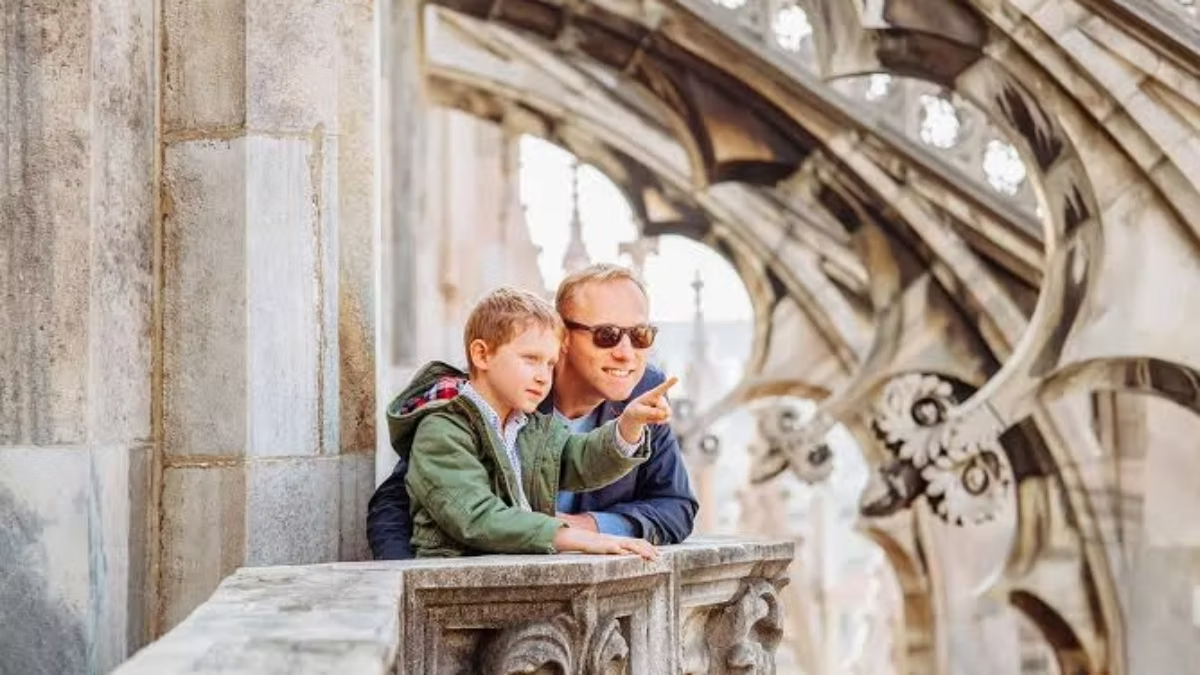
Sforza Castle works well for families because the huge courtyards, towers, and ramparts are free and open daily, giving kids room to run before anyone has to sit still in a museum. Under-18s get into the museums free, the Egyptian and musical instrument collections hold their attention better than most fine-art galleries, and Parco Sempione’s playgrounds are right behind the castle for when energy (or patience) runs out.
Sforza Castle is one of the more forgiving big sights in Milan to bring children to, mostly because so much of it costs nothing and asks nothing of them. You don’t need a ticket, a timed slot, or a hushed voice to cross the Piazza d’Armi, duck under the Filarete Tower, or walk the ramparts — and if the museums don’t hold their interest, you haven’t lost anything by skipping them.
This guide covers what actually works for kids here, what doesn’t, how to handle strollers on the cobbles, how long children realistically last, and the practical details — toilets, food, timing, safety — that make or break a family visit.
Why Kids Enjoy Sforza Castle
Kids respond to Sforza Castle because it feels like a real castle rather than a roped-off exhibit: huge open courtyards to run across, a fortress gate tower to walk through, ramparts to climb onto, and a moat and drawbridge to spot at the entrance. None of that requires a ticket, so younger children can burn energy and enjoy the atmosphere even if a full museum visit isn’t in the cards.
The single biggest reason this works for families is scale. The Piazza d’Armi, the main parade courtyard, is enormous and largely empty — a rare thing in central Milan — so kids can run, spin, and shout without bothering anyone. The red-brick walls, corner bastions, and the tall Filarete Tower give the place a genuine fortress look that’s easy for even a five- or six-year-old to read as “castle” without much explanation. Crossing the old moat and passing through the gate under the tower has a bit of drawbridge theater to it, even though the drawbridge itself is long gone.
The three courtyards — Piazza d’Armi, Corte Ducale, and the smaller Rocchetta — each have a different feel, so there’s some variety even in the free part of the visit. Kids who like climbing and exploring generally gravitate to the ramparts and the walk along the walls (the Ghirlanda), where sightlines open up and there’s a sense of height without real danger. None of this needs the museums to be worthwhile; a family can spend a genuinely enjoyable half hour just walking the grounds.
What’s Free vs. What’s Ticketed
The courtyards, ramparts, and grounds are free for everyone, every day — there’s no ticket booth to pass and no gate to swipe through, so a family can wander in, let kids run across the Piazza d’Armi, and leave without spending a cent. Only the museums inside, the Musei del Castello Sforzesco, are ticketed, and they’re covered by one combined ticket. For families this matters practically: you can treat the free grounds as the main event and treat the museums as an optional add-on, rather than feeling you have to “get your money’s worth” once you’re inside.
Under-18 Free Museums
Visitors under 18 get into the Sforza Castle museums free, so for most families the only ticket cost is for the accompanying adults, at around €5 full price (or less for adults who qualify for the reduced rate). That single ticket covers everything — the Egyptian Museum, the Museum of Musical Instruments, the Pinacoteca, the Museum of Ancient Art with Michelangelo’s Rondanini Pietà, the Decorative Arts collection, and the prehistoric material — so there’s no extra charge to let a curious kid detour into the Egyptian rooms while the rest of the family looks at something else. See our ticket prices guide for the full breakdown of who pays what.
The Museums Kids Actually Like
Not every museum inside Sforza Castle holds a child’s attention, but a few genuinely do: the Egyptian Museum’s mummies and sarcophagi, the Museum of Musical Instruments with its unusual and sometimes playable-looking pieces, and the prehistoric collections with early tools and fossil material that read almost like a small natural-history stop. The Pinacoteca and Decorative Arts rooms are quieter and better suited to older kids or a shorter attention span.
Be honest with yourself about which parts of the museums will land with young children and which won’t. Renaissance paintings and antique furniture, however good, rarely hold a seven-year-old’s attention for long, and even the Rondanini Pietà — genuinely worth seeing for adults — is a single quiet, unfinished sculpture that’s more likely to prompt “can we go now” than wonder. Plan for a shorter, targeted visit rather than trying to see all seven collections in one go.
The Egyptian Museum is usually the strongest draw: sarcophagi, funerary objects, and the general “ancient Egypt” subject matter tend to land with kids the way dinosaurs or space do, and it doesn’t take much explaining. The Museum of Musical Instruments is another good stop — the sheer variety of shapes and the idea that these were once played is an easy hook, even if children can’t touch them. The prehistoric and early archaeological material, where present, gives a bit of a “before humans wrote things down” angle that pairs naturally with the dinosaur-and-fossil interest a lot of younger kids already have; it’s not a full natural-history museum, so keep expectations modest, but it’s a genuinely engaging few minutes. Our museums guide has the fuller picture of what’s inside each collection.
Stroller Practicality
Sforza Castle is stroller-friendly in the sense that the main courtyards are large, flat, open spaces — the Piazza d’Armi in particular is easy going. The problem is the surface: much of the ground, and the approach paths from the gates, is old cobblestone or uneven paving, which makes for a bumpy, rattly push and is genuinely hard work with a standard umbrella stroller. A stroller with larger wheels and decent suspension copes far better than a lightweight travel model. Inside the museums, floors are generally smoother, but staircases and older thresholds do appear in a few spots, so a carrier is worth having as a backup for anyone with a baby or toddler who tires of the stroller. If you’re coming from the Duomo or Cadorna on foot, expect cobbled and paved stretches the whole way, not just inside the castle itself.
How Long Kids Last
Most families get a genuinely enjoyable 30 to 45 minutes out of the free courtyards and ramparts alone — long enough to walk the grounds, let kids run across the Piazza d’Armi, and get a look at the towers and walls, without anyone getting bored or overheated. Add the museums, and realistically expect younger children (roughly under 8) to hold interest for another 30 to 45 minutes if you’re selective about which rooms you visit — the Egyptian Museum and Musical Instruments, say, rather than all seven collections. Older kids and pre-teens can usually manage an hour or more inside if the visit has some structure to it rather than open-ended wandering. Total, a family visit that includes both grounds and a targeted museum stop runs about 1 to 2 hours; trying to cover everything in one go with young kids is the most common way a visit goes downhill. For adults visiting without children, our how long to visit guide gives the fuller range.
Keeping It Engaging
A little structure goes a long way with kids here. Before you go in, give them something concrete to look for — count the towers, spot the moat, find the tallest bastion — rather than a general “let’s go look at a castle.” Inside the museums, pick two or three rooms in advance instead of trying to see everything; a shorter, chosen visit beats a long, dragging one every time. Letting kids lead for a stretch — choosing which courtyard to explore, or which museum room to walk into first — tends to buy more patience than marching through a fixed route. And treat the ramparts walk and the walk toward Parco Sempione as part of the visit, not an afterthought: for a lot of kids, the walking and looking-around part of the day is more memorable than the museum rooms.
Parco Sempione and Playgrounds
Parco Sempione sits directly behind the castle, reached on foot through the grounds in a couple of minutes, and it’s a natural place to send kids to burn off remaining energy after the museums. The park has open lawns, paths, and playground equipment in a few spots, plus the Arco della Pace at its far end as a landmark to walk toward. For a family day, a common and comfortable pattern is: courtyards and towers first, a short targeted museum visit, then out the back into Sempione for playground time and a break before heading on to lunch or the next stop. It also gives restless younger children somewhere to go if an older sibling wants more museum time.
Facilities: Toilets, Food, and Breaks
Public toilets are available within the castle grounds, though — as with most historic sites — they can queue up at busy times, so it’s worth using them on the way in rather than waiting until a child urgently needs one. There’s a café/bar option on site for a coffee, snack, or bottle of water, useful for a mid-visit break, though options are limited compared to a full restaurant, so don’t count on it for a proper meal. For lunch or a real sit-down break, Parco Sempione and the streets around Piazza Castello and Cadorna have a wider choice of cafés and casual restaurants. Bring water and a snack regardless — Milan summers get hot, and there isn’t much shade in the open courtyards.
Best Times to Visit with Kids
Mornings, soon after the grounds open at 7:00 AM, are the calmest time to let kids run in the courtyards, with cooler temperatures and far fewer people. If a museum stop is part of the plan, aim to arrive not long after the 10:00 AM opening, before tour groups build up and before midday heat sets in during summer. Late afternoon in the hour or so before the museums close (last entry 5:00 PM) is quieter still, though by then some children are running low on patience, so weigh tiredness against crowd levels. Avoid the hottest midafternoon hours in July and August if you can, since the courtyards offer little shade; if that’s your only window, lean on the shaded ramparts and stick close to water and rest breaks. See our best time to visit guide for a fuller seasonal breakdown.
Safety Notes
The castle is generally a safe, easy environment for families — it’s an open public space with no traffic inside the grounds — but a few things are worth keeping in mind. The ramparts and some raised walkways have real height and drop-offs in places, so keep an eye on younger children who like to climb or lean over the edges. Cobblestones and uneven paving are a trip hazard for kids who are running rather than watching their feet, and the same surfaces get slippery when wet. Milan traffic and trams are just outside the grounds around Piazza Castello, so hold hands crossing to and from the metro or tram stops rather than assuming the calm inside the walls extends to the street. As with any busy tourist site, keep small children close in the main courtyards during peak hours, when the space fills with groups and it’s easy for a fast-moving toddler to get out of sight.
Getting There with Children
The castle sits right in central Milan, an easy walk or transit ride from most parts of the city. Metro line M1 (red) stops at Cairoli Castello directly in front of it, and M1/M2 both serve Cadorna a short walk away; M2 (green) Lanza is another nearby option. All are manageable with a stroller, though Milan’s metro stations vary in how many stairs versus lifts they have, so check ahead if you’re relying on a stroller rather than a carrier. Trams 1, 4, 12, and 14 also stop nearby and tend to be easier with a stroller than the metro. If you’re driving, central Milan falls inside the Area C congestion charge zone, and parking near the castle is limited, so public transport is the simpler choice for a family outing. Full route details are in our getting there guide.
Frequently Asked Questions
Is Sforza Castle good for kids?
Yes — the free courtyards, towers, and ramparts give children plenty of space to explore without needing a ticket, and the Egyptian and musical instrument museums tend to hold their interest better than the fine-art collections. It works especially well paired with a stop in Parco Sempione right behind the castle.
Is entry free for children?
The courtyards and grounds are free for everyone, and under-18s also get into the museums free. The only ticket cost for a family is for accompanying adults, at around €5 each for the combined museum ticket.
How long should we plan for with kids?
Budget 30 to 45 minutes for the free courtyards and ramparts alone, plus another 30 to 45 minutes if you add a targeted museum stop rather than trying to see all the collections. A full family visit, including a break in Parco Sempione, typically runs 1 to 2 hours.
Is the castle stroller-friendly?
The main courtyards are large and flat, which helps, but much of the ground and the approach paths are old cobblestone, which makes for a bumpy push. A stroller with sturdy wheels copes better than a lightweight umbrella model, and a carrier is a useful backup for stairs or thresholds inside the museums.
Which museums do kids like best?
The Egyptian Museum and the Museum of Musical Instruments are generally the strongest draws for children, with the prehistoric material also landing well for kids interested in dinosaurs or early history. The Pinacoteca and Decorative Arts rooms are quieter and suit older kids or a shorter attention span better.
Are there playgrounds nearby?
Parco Sempione, directly behind the castle, has open lawns and playground equipment in a few spots, making it a natural place to let kids run after a museum visit. It’s reached on foot through the castle grounds in a couple of minutes.
Are there toilets and food on site?
Public toilets are available within the grounds, though they can queue at busy times, so it’s worth using them on the way in. There’s a café/bar for coffee, snacks, and water, but options are limited, so plan a proper meal at one of the cafés or restaurants around Piazza Castello or in Parco Sempione instead.
Is the castle safe for young children?
It’s generally a safe, open public space, but the ramparts and some walkways have real height and drop-offs, and the cobblestones are a trip hazard for running kids. Keep younger children close in busy courtyards, and hold hands crossing streets around Piazza Castello, since traffic and trams run just outside the grounds.
What’s the best time to visit with kids?
Morning soon after the 7:00 AM grounds opening is calmest for running around, and arriving shortly after the 10:00 AM museum opening avoids the worst crowds if you’re going inside. Avoid the hottest midafternoon hours in summer, since the open courtyards offer little shade.
Do we need to book tickets in advance?
For a family visit, the low-cost museum ticket can usually be bought on arrival outside peak periods, and the courtyards need no ticket at all. Booking a reserved entry ticket ahead is worth it on busy days or school holidays, when lines build up faster than families with young kids want to wait in.
